

Black coffee can be a shock the first time you drink it on purpose.
If you are used to coffee with cream and sugar, the first cup of black coffee may taste bitter or harsh. You may wonder why anyone drinks coffee this way voluntarily.
That is a common reaction. It does not automatically mean black coffee is not for you. Nor does it mean you need to force down bad coffee. The better goal is to understand whether the problem is the cup, the habit, or the transition away from sweetness and creaminess.
Black coffee tastes bitter at first because there is nothing softening coffee’s natural bitterness, roast flavor, acidity, and strength. If you are used to cream or sugar, your palate notices the bitterness first. Over time, many people perceive more aroma, balance, and natural sweetness as their expectations and taste perception adjust.
The important word is “adjust.”
Black coffee is not only a different flavor. It can feel like a different kind of coffee experience. You are not just removing ingredients. You are changing the sweetness, texture, reward, and expectation of the cup.
That is why the transition can feel harder than it seems on paper.
Why Black Coffee Tastes Bitter At First
The simplest reason black coffee tastes bitter at first is that your palate is tasting coffee without the sweetness, fat, and flavor cues that used to soften it.
Coffee has natural bitterness. That’s part of the drink.
But black coffee does not taste bitter for only one reason. A cup can taste bitter because of the coffee itself, the roast, the brew method, the strength, the temperature, or your own expectations.
This article is mostly about the expectation and adaptation side of the problem. It’s about why black coffee tastes especially bitter when you are new to it, and why that first impression may soften with repetition.
That is different from a cup that is technically brewed wrong.
If your coffee tastes sour, burnt, ashy, stale, or aggressively harsh every time, the issue may not be adaptation. It may be extraction, roast level, freshness, or brewing method. In that case, start with a brewing diagnosis before treating the problem as a black coffee problem.
For that deeper troubleshooting path, read Why Black Coffee Tastes Bitter or Sour and How to Fix It Without Guesswork.
For now, assume the cup is at least drinkable. It may not be your favorite cup yet, but it’s not obviously ruined. That’s where adaptation matters.
Cream And Sugar Change What Coffee Feels Like It Is Supposed To Be
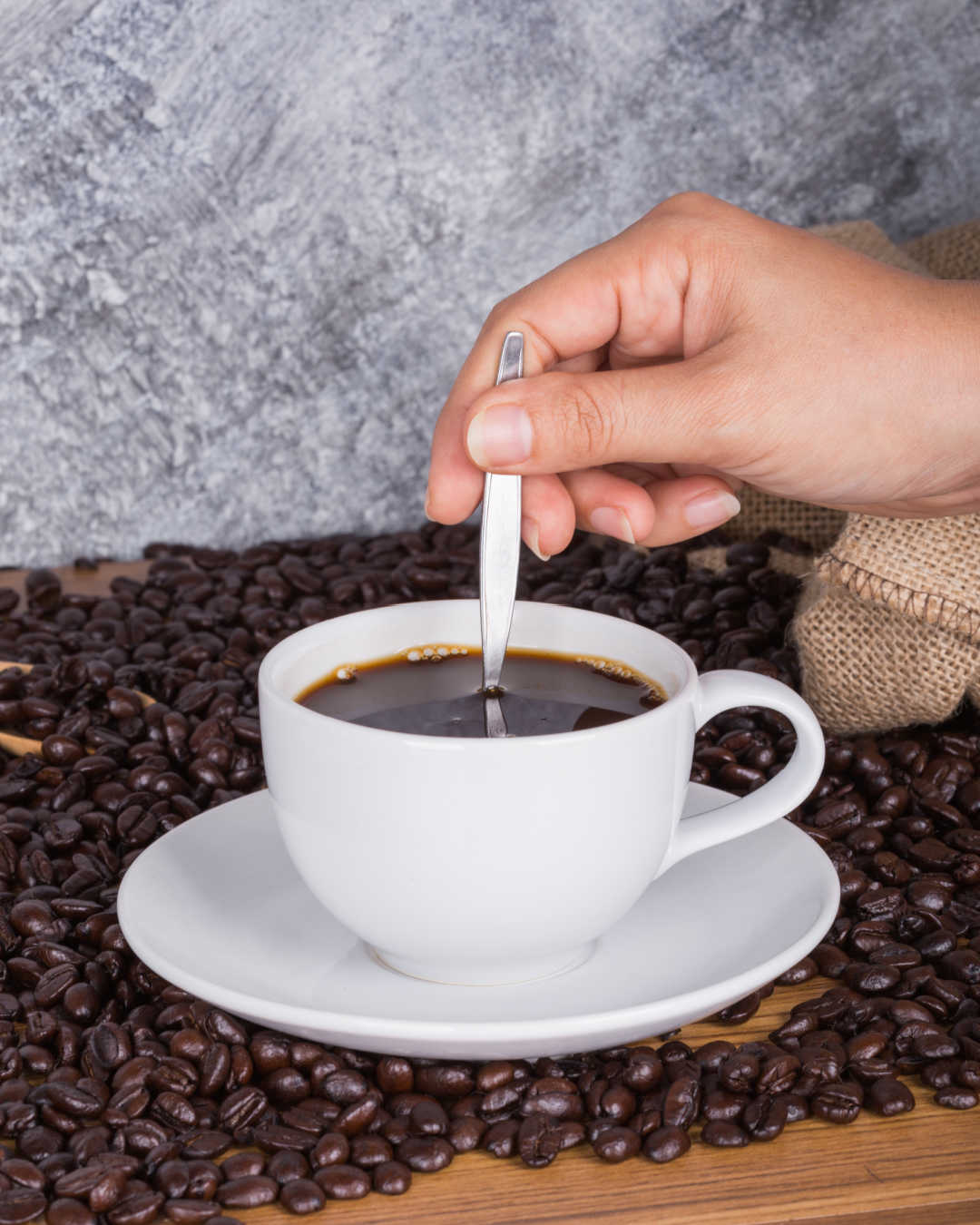
Cream and sugar do more than change flavor. They change what coffee feels like it’s supposed to be.
For many people, coffee is not only a caffeine drink, it’s a comfort cue. It’s part of the morning: warm, familiar, sweet, creamy, and predictable. The first few sips tell the brain that the day has started in a normal way.
When you remove cream and sugar, you may not only miss the sweetness. You may miss the whole feeling of the old cup.
That’s because the first black coffee experience is often judged against the old version. The question becomes, “Why does this taste worse than my normal coffee?”
That comparison is understandable. But it may also be unfair to black coffee.
A sweet, creamy coffee and a black coffee are not trying to do the same thing. One is soft, rounded, and often dessert-adjacent. The other is more exposed. It asks you to notice roast, aroma, strength, acidity, body, and finish.
At first, the exposed version may feel like a reduced version.
It’s not necessarily reduced; it’s less masked. That difference takes time to understand.
The First Few Cups Can Feel Disappointing
People often talk about switching to black coffee as if it’s only a taste adjustment.
Sometimes it’s also an expectation adjustment.
You may feel like you gave something up and received a worse cup in return. The coffee may no longer feel rich or feel like a treat. It may no longer give the same small moment of comfort.
That reaction can make bitterness feel stronger.
If the old cup gave you sweetness, creaminess, aroma, and comfort, the new cup has to compete with that memory. The first black cup is not being judged by itself. It is being judged against the cup you already liked. That can create an early failure story.
“I guess I do not like black coffee.”
“I guess coffee is only good with cream.”
“I guess people who drink black coffee have different taste buds than I do.”
Those may turn out to be true for some people. There is nothing wrong with preferring coffee with something added.
But those conclusions are often too early.
A better first goal is not to love black coffee immediately but to notice what is actually happening.
Is the coffee bitter, or is it burnt? Is it strong, or is it harsh? Is it unfamiliar, or is it bad? Is the problem the cup, the habit, the timing, or the fact that it no longer tastes like your normal coffee?
Those are different problems. They need different answers.
Bitterness Often Becomes Less Dominant With Repetition

Black coffee often gets easier because bitterness stops being the only thing you notice.
The coffee itself may not become sweeter. Your perception of the cup changes. You start to separate bitterness from roast, aroma before bitterness. You notice whether the body feels thin or full. You notice whether the finish is clean, dry, smoky, sour, stale, or pleasant.
It’s a recalibration.
Recalibration does not mean becoming a coffee snob but that your palate is getting better at sorting signals.
At first, black coffee may taste like one large category: bitter. After repeated cups, it may start to break into smaller categories.
One cup may taste nutty. Another may taste smoky. Another may taste flat. Another may taste bright. Another may taste smooth but strong. Another may taste burnt.
The more specific your perception becomes, the less trapped you are by the word “bitter.”
This works best when you do not treat every cup as a pass or fail test.
If you ask “Do I love black coffee yet?” every morning, you may quit before the transition has time to work. A more useful question is, “What do I notice in this cup?”
That question lowers the pressure. It also gives you better information.
When The Problem Really Is The Cup, Not Your Palate
Not every bitter cup is a growth opportunity.
Some black coffee is just too bitter for you. Some coffee is brewed in a way that makes bitterness more obvious. Some coffee is too dark for your taste. Some coffee has sat too long. Some coffee is stale.
You do not need to force yourself through bad coffee to prove anything.
A reasonable transition to black coffee should include both patience and judgment. Patience helps you avoid quitting too early. Judgment helps you avoid blaming yourself for a bad cup.
If every cup tastes burnt, ashy, rubbery, stale, sour, or aggressively harsh, the problem may not be your palate. The problem may be the coffee or the brewing process.
That is the point where this article should hand you off to a more practical troubleshooting path. Use this bitter or sour black coffee guide to decide whether the cup needs more extraction, less extraction, or a simpler one-variable adjustment.
The goal is not to suffer through bitterness but to find out whether black coffee itself is the problem, or whether this specific version of black coffee is the problem.
How To Make The Transition Easier
If your goal is to drink black coffee, you do not have to make the transition as hard as possible.
Start with a cup that gives you a fair chance. For many people, that means avoiding the harshest, darkest, oldest, or strongest coffee during the transition. You’re trying to learn black coffee, not endure the most difficult version of it.
Let hot coffee cool for a few minutes before judging it. Very hot coffee can make bitterness and harshness harder to interpret. As the cup cools, aroma and sweetness can become easier to notice.
Try smaller sips. Black coffee often feels more intense when you drink it the same way you drank a sweet, creamy cup. Small sips give your palate more time to process the flavor.
Try iced black coffee if hot black coffee feels too sharp. Cold brew or iced coffee can feel smoother to some drinkers, especially during the early transition.
You can also reduce cream or sugar gradually. There is no rule that says you must quit everything at once. If your current coffee is very sweet, moving toward black coffee in stages may be more sustainable.
One useful experiment is to judge the transition over seven cups, not just one cup.
Use the same general coffee and routine if you can. Take a few sips before deciding what you think. Notice whether the bitterness becomes less shocking. Notice whether you begin to identify anything besides bitterness.
If the coffee tastes burnt, stale, sour, or physically unpleasant, change the coffee or troubleshoot the brewing method. Do not keep repeating a bad test.
The point is not purity.
The point is calibration.
When Black Coffee Is A Choice, Not A Purity Test
You may still prefer coffee with milk, cream, or sweetener.
That is understandable. A sweeter, creamier cup may feel more familiar, more comforting, and more enjoyable at first.
But preference is not always the only reason people choose black coffee. Some people drink black coffee because they are trying to reduce sugar. Some want a simpler daily habit. Some want coffee without turning it into a dessert drink. Some are following health advice from their physician.
That does not make black coffee morally superior. It makes it intentional.
The goal is not to prove that you are disciplined enough to drink something unpleasant. It’s to make the choice easier to sustain if black coffee supports the kind of habit you are trying to build.
That distinction matters.
If you add cream or sweetener because you genuinely enjoy it and it fits your health goals, that’s your choice. But if you are adding it mainly because the first few black cups felt too bitter, it may be worth giving your palate more time before deciding black coffee is not for you.
Black coffee does not have to become your identity. It only has to become understandable enough that you can choose it on purpose.
Final Thoughts
Black coffee tasting bitter at first is common.
It may be your palate adjusting. It may be your expectations adjusting. It may be the loss of sweetness and creaminess. It may be a bad cup. It may be a brewing problem.
Do not treat the first bitter cup as the final verdict.
Give your palate time. Fix obvious brewing problems. Try a milder coffee. Try a slightly easier cup. Notice what changes across several cups instead of judging everything from the first sip.
Black coffee usually gets easier when you stop treating the first bitter cup as a test of willpower and start treating it as the beginning of calibration.