
Quick Answer: Black coffee can taste bitter or sour for several reasons. Extraction may be involved, but roast, strength, water, freshness, serving temperature, and personal preference also affect what you perceive. Treat bitterness and sourness as clues rather than automatic diagnoses. Change one variable at a time and compare the result before deciding what caused the problem.
The One Change Rule for Fixing Bad Coffee
When something tastes wrong, describe the sensation before changing the recipe. A sour cup that also tastes thin or hollow may benefit from a small adjustment toward more even or greater extraction. A bitter, drying cup may benefit from less extraction or lower concentration, but roast level and coffee freshness may also be contributing.
Change one variable and compare. If the expected improvement does not appear, reconsider the diagnosis rather than continuing in the same direction.
Changing more than one variable at the same time makes it impossible to learn what actually helped. Taste is the signal. Adjustment is simply how you respond to it over time.
Bitter vs Sour Black Coffee Explained Simply
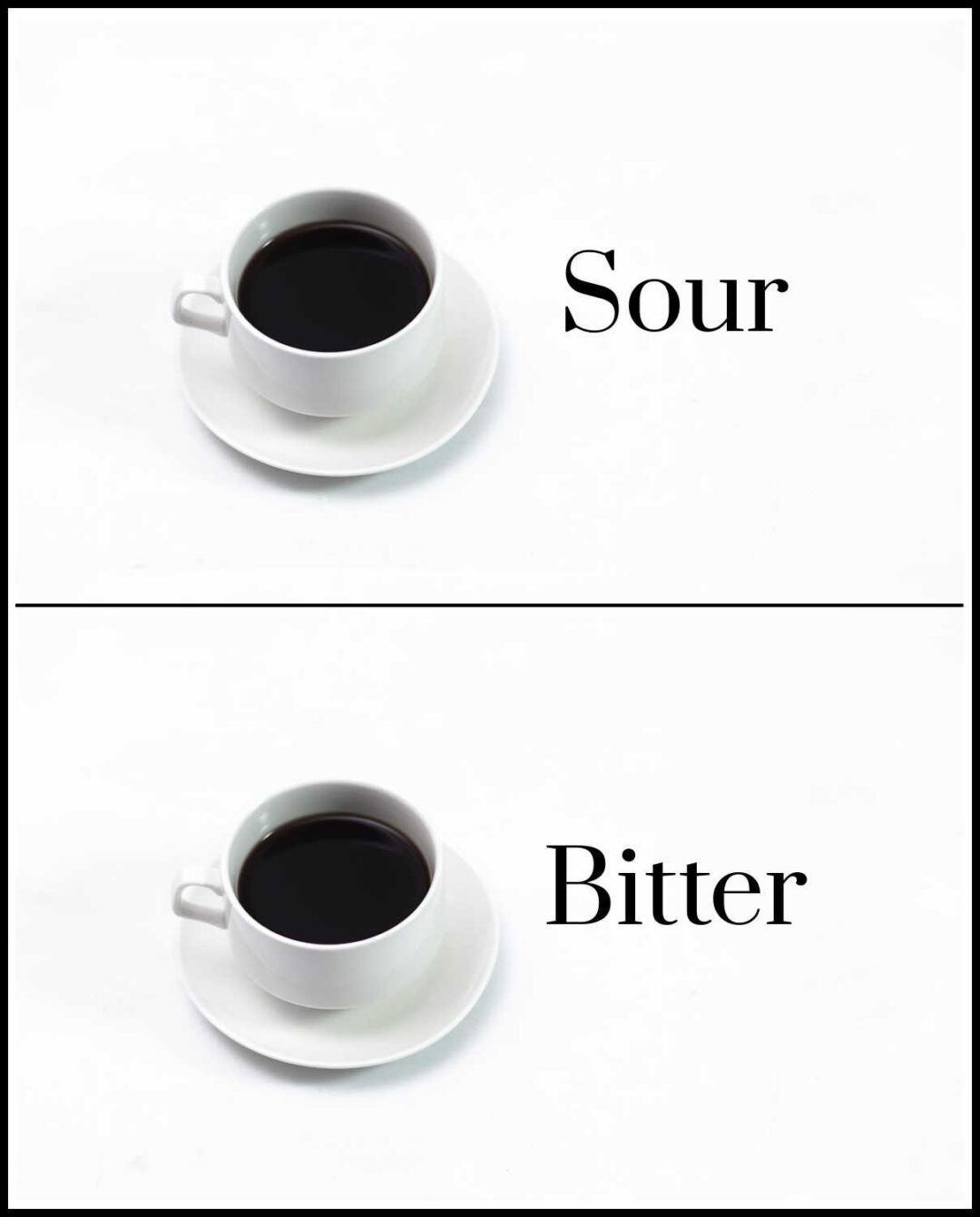
One of the biggest frustrations for new black coffee drinkers is not knowing what they are tasting, and that confusion is completely normal.
Sourness tastes sharp, thin, or acidic. It can feel dry on the sides of the tongue and often fades quickly. Bitterness tastes heavy, harsh, or lingering. It often shows up at the back of the mouth and builds or stays.
Many people confuse the two. Black coffee makes these differences more obvious, which makes diagnosis easier once you know what to look for.
Learning to tell bitter from sour is the first step toward knowing which direction to adjust.
What Can Make Black Coffee Taste Sour?
Sourness can be associated with under-extraction, especially when the cup also tastes thin, hollow, or undeveloped. But sourness can also reflect the coffee’s natural acidity, roast level, water, strength, or brewing conditions.
First decide whether the sensation is unpleasant sourness or a brightness you simply do not enjoy. If the cup tastes thin and sharply sour, test one small change such as a slightly finer grind, longer contact time, or more even saturation. Keep everything else the same and judge the result rather than assuming the original diagnosis was correct.
If under-extraction appears to be involved, possible causes include:
- Grind size that is too coarse
- Brew time that is too short
- Water temperature that is too low
- Uneven saturation at the start of brewing
Under extracted coffee can smell pleasant but taste thin, sharp, or hollow. The cup often feels weak and unsatisfying rather than harsh.
What Can Make Black Coffee Taste Bitter?
Bitterness is a natural part of coffee, and its intensity depends on the beans, roast, strength, freshness, and brewing. Over-extraction can produce an unpleasant drying or harsh character, but bitterness alone does not prove that the coffee was over-extracted.
If the cup is both bitter and drying, test one small adjustment such as a slightly coarser grind, shorter contact time, or less agitation. If the bitterness remains, compare the coffee at a lower concentration or try a less dark roast before continuing to reduce extraction.
If excessive extraction appears to be involved, possible causes include:
- Grind size that is too fine
- Brew time that is too long
- Excessive stirring, pouring, or pressing
- Very dark roasts brewed with high heat or long contact
Over extracted coffee tastes heavy, drying, or harsh. Serving temperature changes which sensory attributes stand out, so retaste the cup when it is comfortably warm before deciding what to adjust.
Method Specific Fixes for Black Coffee Drinkers
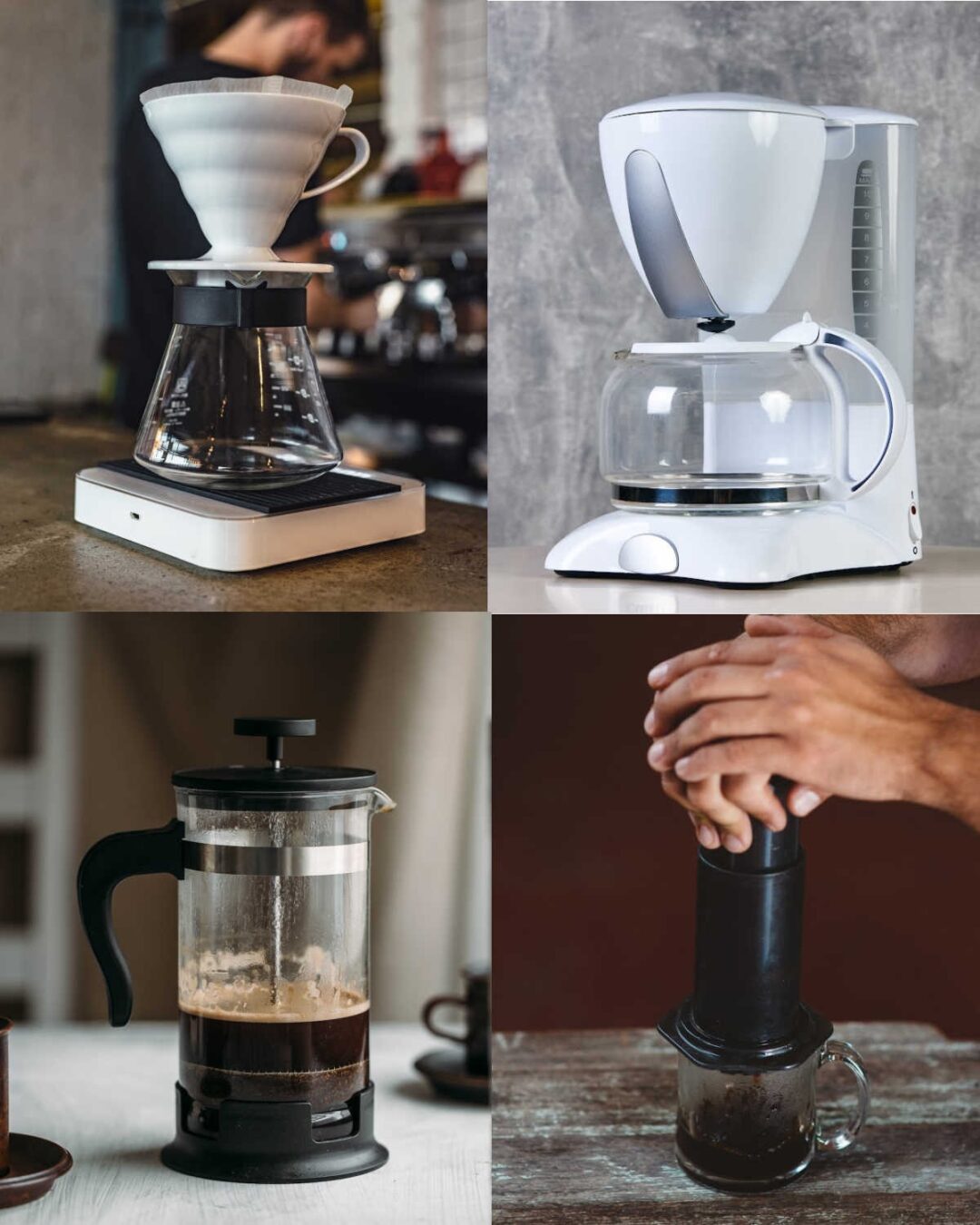
Each method responds differently to the same problem, so fixes that work for one style may fail in another.
Pour Over Coffee Brewer Fixes
Pour over offers the most control, which also makes it the easiest to overcorrect when you are still learning what changes actually matter.
If the coffee tastes sour:
- Grind slightly finer
- Slow the pour to extend brew time
- Make sure all grounds are evenly saturated at the start
If the coffee tastes bitter:
- Grind slightly coarser
- Reduce agitation during pouring
- Avoid very long drawdown times
Pour over bitterness often comes from working the bed too hard rather than from the beans themselves.
Drip Coffee Maker Fixes
Drip machines limit control, so results depend heavily on inputs. Uneven spray patterns and low brew temperatures are common limitations. If small adjustments stop helping, the machine itself may simply be the limit of what you can change, not a reflection of your ability.
What you can control:
- Grind size
- Coffee to water ratio
- Filter type
- Machine cleanliness
If the coffee tastes sour:
- Use a slightly finer grind than standard store bought ground coffee
- Increase the coffee dose before increasing water
- Avoid overfilling the basket
If the coffee tastes bitter:
- Use a slightly coarser grind
- Reduce coffee dose before reducing water
- Use paper filters instead of metal filters
- Clean the machine regularly to remove residue buildup
AeroPress Fixes
AeroPress concentrates flavor, so small changes have large effects.
If the coffee tastes sour:
- Increase steep time slightly
- Grind finer
- Make sure the coffee is fully immersed before pressing
If the coffee tastes bitter:
- Shorten steep time
- Grind coarser
- Press gently and stop before forcing out the final liquid
Most AeroPress bitterness comes from pressing too hard or too long, not from the recipe.
French Press Fixes
French press emphasizes body and extraction, which can hide early mistakes and exaggerate later ones.
If the coffee tastes sour:
- Grind slightly finer
- Extend steep time by 30 to 60 seconds
- Stir gently at the start to ensure even extraction
If the coffee tastes bitter or muddy:
- Grind coarser
- Reduce steep time
- Avoid aggressive stirring
- Let grounds settle before pressing
French press improves dramatically when agitation is reduced and grind size is corrected.
When the Beans Are the Problem and When They Are Not
Beans matter for black coffee, but they are rarely the first problem.
Extraction is one important part of bitterness and sourness, but it is not the only one. Dark roasts can emphasize bitter, smoky, or ashy qualities. Light roasts can present more noticeable acidity. Old coffee may taste flat or hollow regardless of brewing technique.
Test the brewing process before replacing the beans, but do not continue changing extraction when the results point instead to roast, freshness, water, strength, or personal preference.
Taste Is Feedback, Not Failure
Bitter and sour flavors provide hypotheses, not verdicts. A thin, sour cup may suggest testing slightly more extraction. A drying, bitter cup may suggest testing less extraction or lower concentration. The result of that controlled comparison tells you more than the original taste alone.
Change one variable, compare, and reconsider if the cup does not improve in the expected direction. Taste is useful feedback, but it still requires interpretation.