

Paper filters can change more than the taste and body of your coffee. They can also reduce some of the coffee oils linked with higher LDL cholesterol. That means the way you brew your coffee may matter more for cholesterol than whether the coffee is caffeinated or decaf.
That doesn’t mean one French press will suddenly change your cholesterol, or that paper-filtered coffee is a treatment. But brewing method can change your exposure to the coffee compounds associated with higher LDL, especially if cholesterol is already something you’re watching.
Filtered Coffee and Cholesterol: The Short Answer
Coffee is not one uniform drink. There are a lot of variables, and brewing method is one of the variables that can change what ends up in your cup.
Paper filters hold back much of the oily material that carries the coffee compounds associated with higher LDL cholesterol. Boiled coffee, Turkish coffee, French press, and some machine-prepared coffees generally allow more of those compounds through. Espresso is variable because serving size, pressure, grind, and equipment differ.
A 2025 study of workplace coffee machines found that many machine coffees contained substantially more of those compounds than home paper-filtered coffee, although the amounts varied widely from one machine to another. Paper-filtered samples in that study were among the lowest.
So if cholesterol is the concern, the relevant question is not just, “Do I drink coffee?” It’s, “How is my coffee filtered?”
The Cholesterol Issue Comes From Coffee Oils, Not Mainly Caffeine
Coffee contains oily compounds called diterpenes. The two most often discussed are cafestol and kahweol. Cafestol has the stronger established effect on blood cholesterol, which is why brewing methods that let more coffee oils into the cup matter in this discussion.
Controlled research has shown that regular cafestol intake can raise serum cholesterol, while filtration studies help explain why exposure varies so much by brewing method.
This is why decaf does not automatically solve the cholesterol question. Decaffeination removes caffeine, not necessarily cafestol and kahweol. A decaf French press is still a French press in terms of filtration.
The same distinction matters in the other direction: caffeinated paper-filtered coffee can still be relatively low in diterpenes because the paper filter, not caffeine removal, is doing the relevant work.
What a Paper Filter Actually Removes
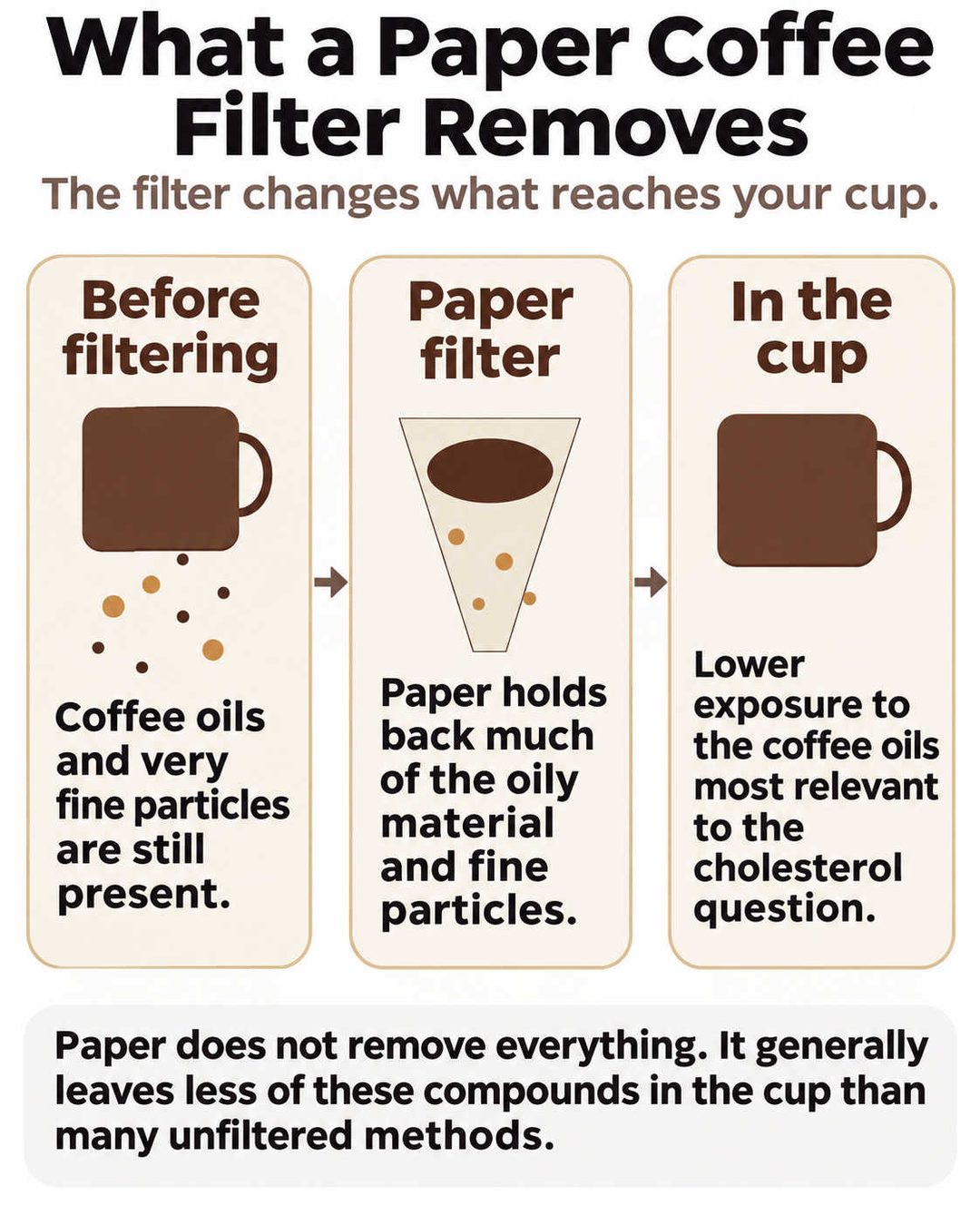
A paper filter holds back much of the oily material and fine particulate matter that carry diterpenes.
That doesn’t mean the paper captures every drop of oil or every molecule of cafestol. Studies have found measurable diterpenes in paper-filtered coffee, and the amount can vary with the filter, grind, coffee, and brewing conditions. The practical difference is that the levels are usually far lower than in unfiltered methods.
For taste, this same filtering action also helps explain why paper-filtered coffee often feels cleaner and lighter than metal-filtered coffee. TBCL’s Paper vs Metal Coffee Filters article owns that taste and mouthfeel question. Here, the important point is that paper changes what reaches the cup in a way that can also matter for cholesterol.
Which Brewing Methods Leave More Diterpenes in the Cup
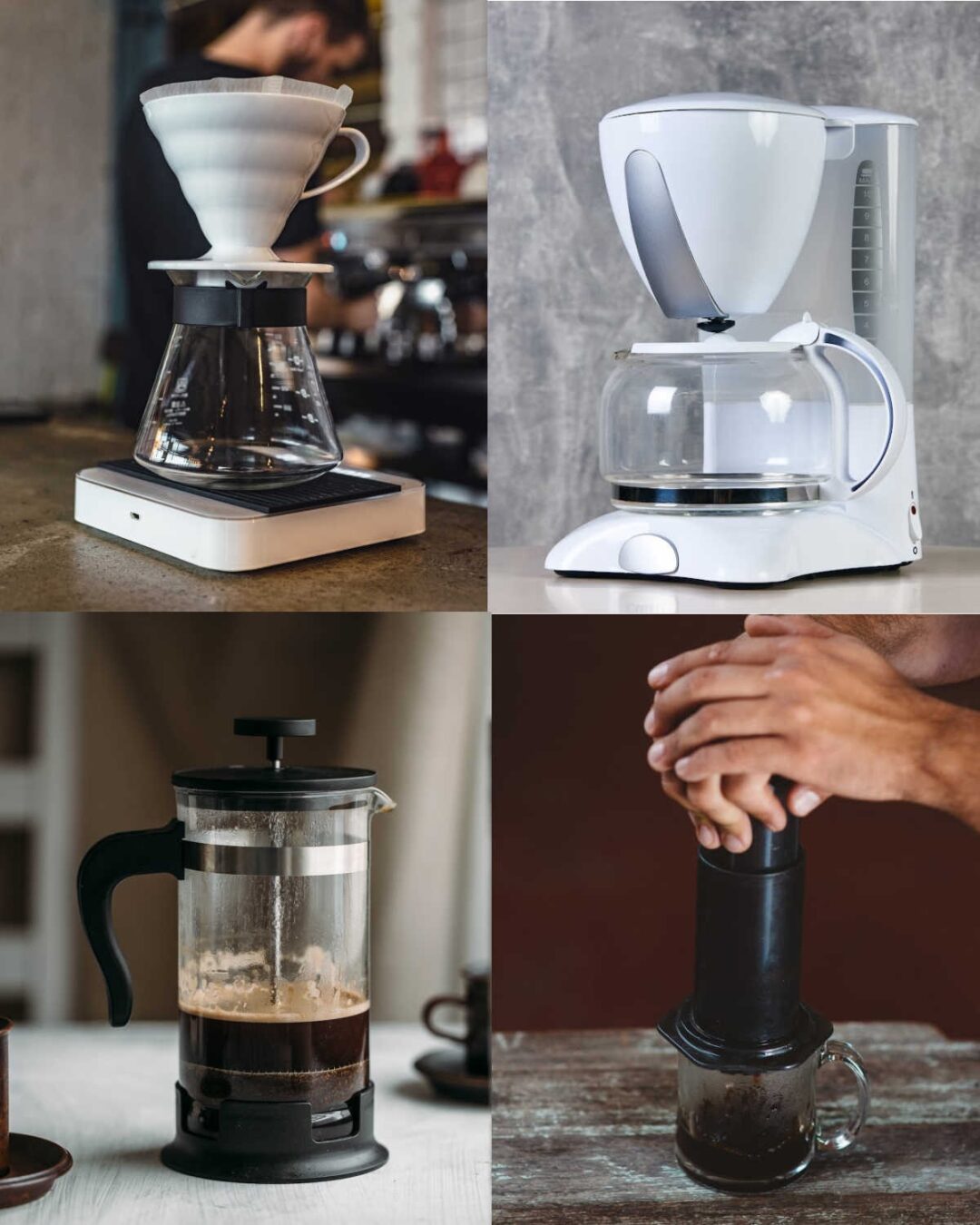
Brewing categories help, but they are not exact guarantees. The amount of cafestol and kahweol can vary within the same method, so it is better to think in broad patterns than fixed numbers.
Paper-Filtered Drip
Paper-filtered drip coffee is generally among the lowest-diterpene methods. That is why health guidance discussing coffee and cholesterol often points toward paper filtration when a person wants to reduce exposure without giving up coffee.
The difference comes from the physical filtering step, not from drip brewing by itself. A reusable metal filter does not behave the same way as paper.
French Press and Boiled Coffee
French press and boiled coffee leave more of the coffee oils in the beverage. Those methods therefore tend to contain more cafestol and kahweol than paper-filtered drip.
That does not make them “bad” brewing methods. It means the tradeoff changes if cholesterol is a specific concern.
Espresso
Espresso sits in a less tidy middle ground. Harvard’s Nutrition Source has described espresso as generally containing more cafestol than paper-filtered coffee but less than boiled or French press coffee. More recent laboratory measurements also show that individual espresso samples can vary dramatically.
Serving size matters too. A small espresso and a large mug of brewed coffee are not directly comparable just because one has a higher concentration.
Workplace or Bean-to-Cup Machines
Automatic workplace machines deserve separate attention because the words “machine coffee” hide several designs. The 2025 study found a wide range of diterpene concentrations across brewing machines and liquid-model machines.
Some machines produced coffee closer to paper-filtered levels, while others produced much higher concentrations. So it’s not accurate to assume that coffee from an automatic machine is effectively paper-filtered unless you know how that machine handles filtration.
How Strong Is the Evidence That Unfiltered Coffee Can Raise LDL?
The link between cafestol exposure and higher cholesterol is better established than broader claims about coffee causing cardiovascular disease.
Controlled human studies have shown that cafestol can raise serum cholesterol. Observational studies comparing brewing habits and cardiovascular outcomes are more complicated because coffee drinkers differ in diet, smoking, activity, serving size, and many other factors.
That distinction matters. Measured diterpene concentration can show how much cafestol and kahweol are in a beverage. A cholesterol study shows how those compounds can affect blood lipids. Neither result alone proves that one brewing method will cause a heart event in an individual.
For TBCL readers, the practical conclusion is narrower: if LDL cholesterol is something you are already monitoring, paper filtration is one reasonable way to reduce exposure to the coffee compounds most clearly linked with raising it.
Does This Matter If You Only Drink One or Two Cups?
There is no universal cup-count threshold that applies to everyone. Exposure depends on the concentration of diterpenes in the coffee, serving size, frequency, and the person’s baseline cholesterol and overall health.
A person drinking an occasional French press has a different exposure pattern from someone drinking several large cups of unfiltered coffee every day. The same is true for espresso, where small serving size can partly offset a higher concentration.
If your LDL is already high, or your clinician has asked you to reduce dietary factors that may raise it, brewing method becomes more relevant. If your cholesterol is not currently a concern and your intake of unfiltered coffee is modest, the practical importance may be smaller, but there is no single cup-count threshold that applies to everyone.
Does a Metal Filter Count as Filtered Coffee?
Not in the same sense used in most cholesterol discussions.
A metal filter removes grounds and larger particles, but it allows more oils and very fine material into the cup than paper. That is why metal-filtered coffee often has more body and sediment.
So a metal filter can be “filtered coffee” in everyday language while still behaving more like an unfiltered method for the specific compounds being discussed here. If reducing diterpene exposure is the goal, paper is the more established choice.
What to Do If You Are Concerned About Cholesterol
If you like black coffee and want to reduce cafestol exposure, the simplest change is to use paper-filtered coffee more often. No need to stop drinking coffee or replace every brewing method you enjoy.
If you already have high LDL, cardiovascular disease, or a treatment plan involving cholesterol, use your lab results and clinician’s advice as the primary guide. Changing filters can reduce exposure to coffee diterpenes, but it’s not a substitute for prescribed treatment or broader dietary changes.
If you want to understand what that filter change may do to taste and mouthfeel, the next useful page is Paper vs Metal Coffee Filters: How Each Changes Black Coffee Taste.