
Quick Answer: Black coffee often tastes flat after about ten days because aroma fades first, sweetness declines next, and bitterness becomes more noticeable. This predictable sequence is the stale curve. It happens even with normal airtight storage and before coffee smells obviously stale.
This applies to both freshly ground whole beans and pre-ground coffee opened from a sealed container. Whole beans stale more slowly, but they still follow the same pattern once exposed to air.
For some coffees this happens sooner, and for others later, but the sequence stays the same.

Introduction
If your black coffee tastes fine for the first few days after opening a bag, then slowly becomes dull, muted, or lifeless, you’re not imagining it.
This shift usually shows up somewhere between day eight and day twelve. The coffee does not smell bad or rancid. It just tastes flat.
Understanding why this happens helps you stop chasing grind changes, water tweaks, or new equipment when the real issue is simply time.
What Does Flat Coffee Actually Mean
When people say coffee tastes “flat,” they usually mean a combination of things:
- Aroma feels weak or absent
- Sweetness is muted
- Acidity feels dull rather than bright
- Bitterness lingers without balance
- The finish disappears quickly
Flat coffee isn’t aggressively bad: it’s disappointing. The cup feels incomplete, even though nothing seems obviously wrong.
This matters more in black coffee because there is nothing to hide behind. Milk or sugar can mask dullness. Black coffee cannot.
This is one of the easiest changes to notice as your palate improves.
The Stale Curve Explained
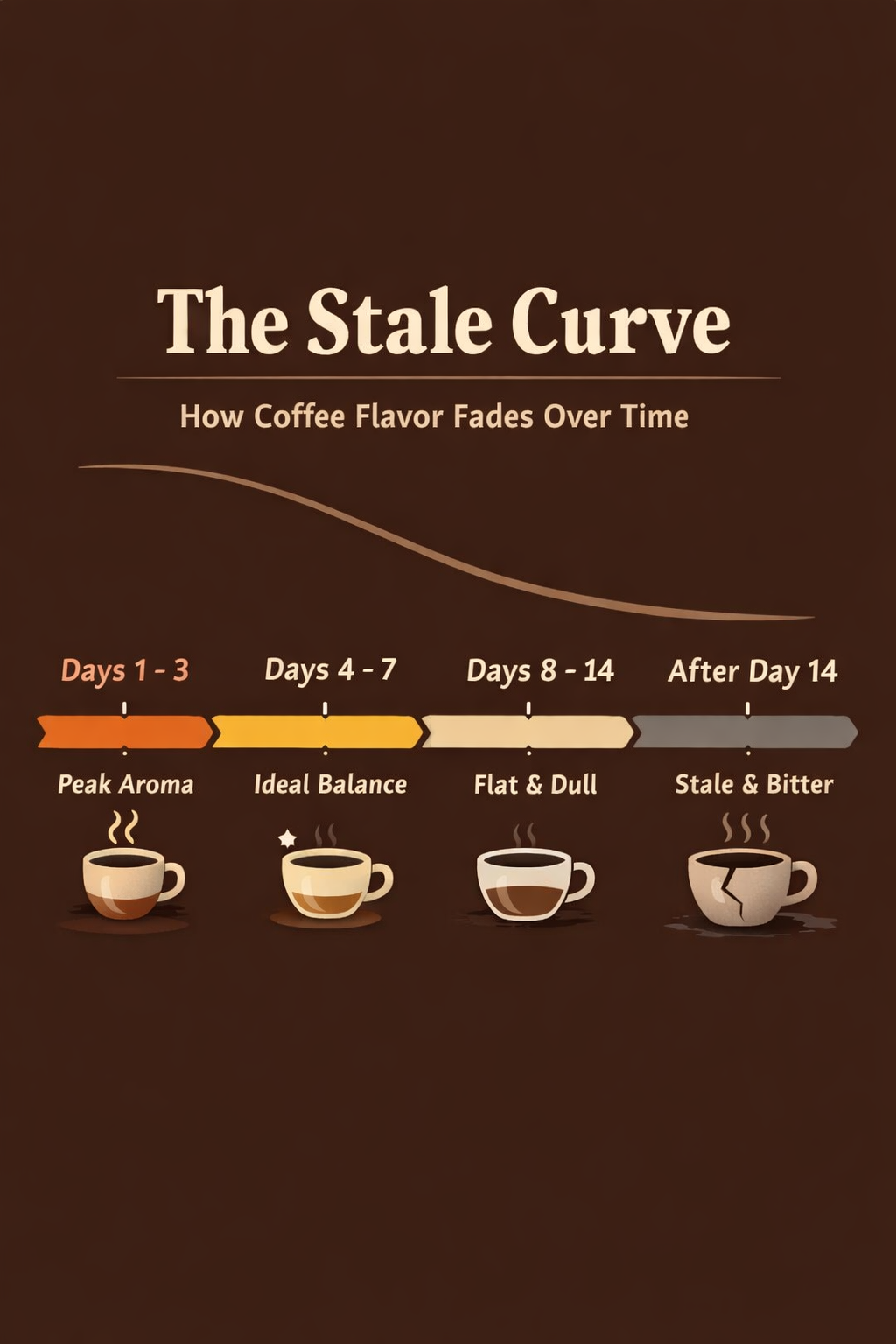
Coffee does not go stale all at once. Flavor fades in a predictable sequence as aroma compounds degrade over time, a process well documented in coffee staling research.
Days 1 to 3
Aroma is the strongest. Volatile compounds are intact. Coffee smells expressive and lively.
Days 4 to 7
The balance window. Aroma softens slightly, but sweetness and structure still hold together. Many people consider this the ideal drinking range.
Days 8 to 14
The flatness phase. Aroma drops sharply. Sweetness fades. Bitterness becomes more noticeable because it is one of the last sensations to remain. Bitterness does not increase so much as it becomes more obvious once aroma and sweetness fade.
After Day 14
Obvious staleness: papery, woody, or hollow flavors appear. The coffee may still be drinkable, but it’s no longer enjoyable.
The key insight here is that coffee can taste flat well before it smells stale.
Coffee is a fresh food. It has a “best before” window, not a permanent setting.
Why Black Coffee Shows Staleness Faster Than Coffee With Milk
Milk changes perception.
It adds sweetness, fat, and texture. These elements fill in gaps when coffee loses aroma and complexity. Bitterness feels softer. Flatness feels less obvious.
Black coffee has no such buffer. When aroma drops and sweetness fades, there is nothing to replace them. What remains is structure without expression.
This is why black coffee drinkers often notice staleness earlier and more clearly than people who add milk.
Is Coffee Flat Because It Is Old Or Because It Is Stale
This distinction matters.
Coffee being old usually refers to time since roasting.
Coffee being stale refers to time since exposure to oxygen.
A freshly roasted coffee can taste flat if it has been open too long. An older roast can still taste good if it has been protected and used quickly.
Most flat tasting coffee problems are caused by staling, not roast age alone.
Why Coffee Loses Aroma Before It Loses Bitterness
Aroma comes from volatile compounds. These compounds evaporate or oxidize quickly once coffee is exposed to air.
Bitterness comes from more stable compounds. They linger even as aroma disappears.
This is why stale coffee often tastes bitter and dull rather than sour or sweet. The balance shifts because the most fragile elements disappear first.
It is also why coffee can smell fine in the bag but taste flat in the cup.
How Storage Affects The Stale Curve
Good storage may slow the stale curve. It doesn’t stop it.
Airtight containers, reduced light exposure, and cooler temperatures all help. But once coffee is opened, oxygen will find it.
Better storage stretches the curve. Poor storage steepens it. Neither eliminates it.
This is why even carefully stored coffee eventually tastes flat.
Why Grinding Coffee Makes The Stale Curve Steeper
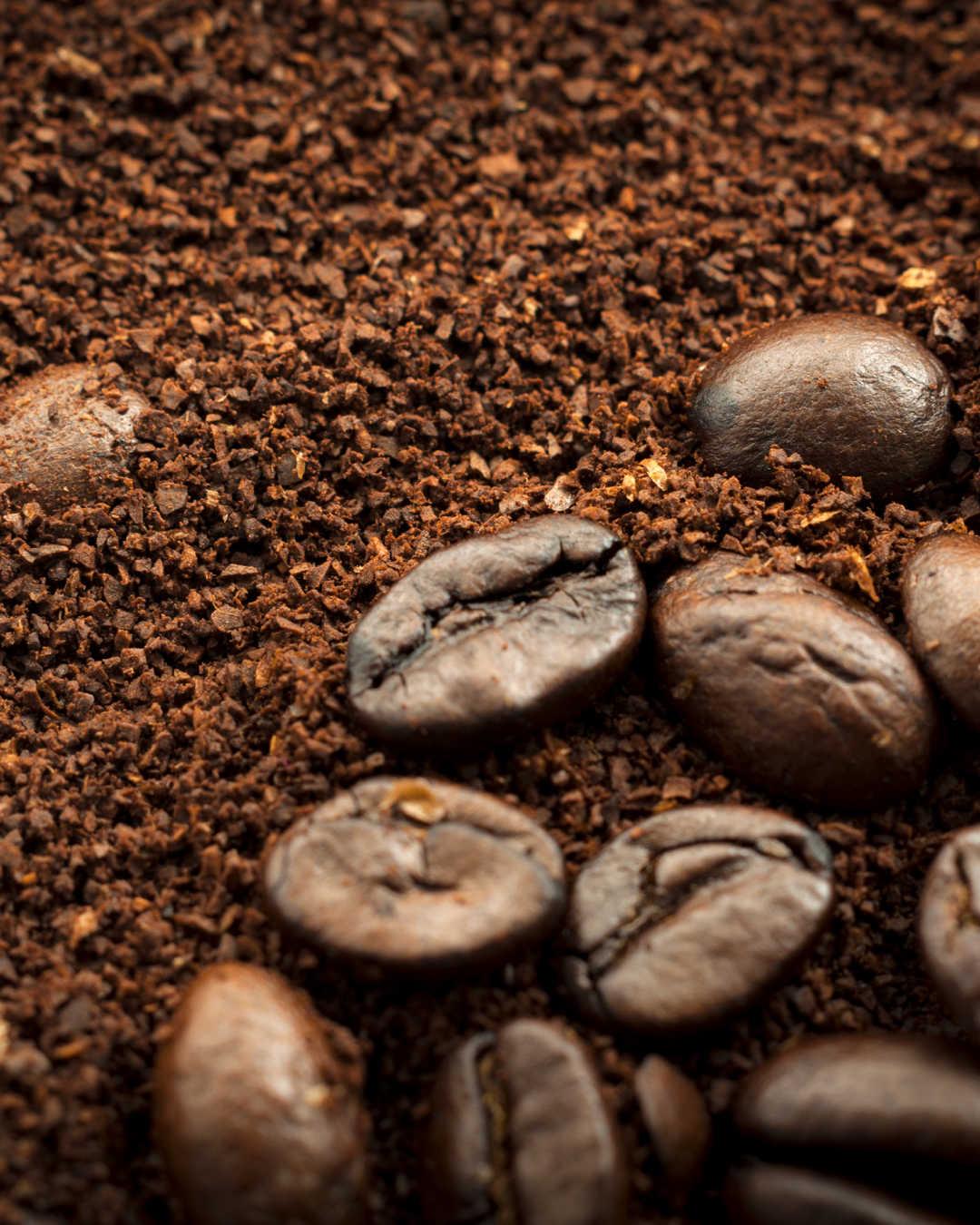
Grinding dramatically increases surface area.
More surface area means more exposure to oxygen. This accelerates the loss of aroma and sweetness.
Pre-ground coffee often enters the flat phase within days, not weeks. This is not a quality judgment: it is chemistry. Grinding does not create staleness. It accelerates it by increasing surface area, not because of quality or intention.
If your coffee tastes flat very quickly, grinding fresh is one of the highest impact changes you can make.
How To Tell If Flat Coffee Is The Beans Or The Brew
Stale coffee and poor water can produce similar dull flavors, which is why changing only one variable at a time matters.
Before changing everything, try this simple diagnostic approach:
- Brew the same coffee with a different water source
- Adjust grind slightly finer or coarser
- Increase dose modestly
- Compare with a freshly opened bag if possible
If none of these changes restore clarity or sweetness, the beans are likely past their peak.
This step matters psychologically: it helps you stop blaming yourself or your technique.
Can You Fix Flat Tasting Coffee
Sometimes a little. Often not fully.
Things that may help slightly:
- Brewing hotter
- Using a slightly finer grind
- Increasing dose
Things that usually do not help:
- More agitation
- Longer brew times
- New equipment
Once aroma is gone, it cannot be brewed back in. This does not mean the coffee is useless, only that it will not taste like it did at its peak. At some point, the most rational choice is acceptance, not optimization.
If you decide to finish the bag anyway, treat it as drinkable coffee, not a personal failure.
How To Slow The Stale Curve Without Obsessing
You don’t need perfection. You do not need a perfect setup to keep coffee in its best window.
Buying smaller quantities more often, keeping coffee sealed between uses, and grinding only what you need will meaningfully slow flavor loss. None of these require perfection. Accepting that coffee is temporary also helps. The goal is not eternal freshness. The goal is spending more time in the good part of the curve.
When Flat Coffee Is A Signal To Buy Less Coffee
Flat coffee is often a purchasing problem, not a brewing problem.
If you consistently reach the flat phase before finishing a bag, the solution is not better technique. It is buying less coffee at a time.
This can feel inefficient. But in practice, it usually leads to better daily coffee and less frustration.
Final Thought
Flat coffee is not a failure. It is a signal.
Once you understand the stale curve, you stop chasing fixes that cannot work. You start making calmer, more effective decisions about buying, storing, and using coffee.
For black coffee drinkers, that understanding is freeing.
If you want to go deeper, understanding how water and storage interact with the stale curve will make these changes feel even more predictable.