
A first sip taken while the coffee is very hot can create a different impression from the same cup ten minutes later.
The same black coffee can seem different as it cools because temperature changes aroma release, thermal sensation, and what your senses notice most easily. Cooling does not automatically reveal a “truer” or “better” version of the coffee, but tasting the same cup at more than one temperature can give you useful information before you decide to change the recipe.
The Coffee Is the Same, but Your Experience of It Changes
Once brewing is finished, the coffee does not suddenly become a different recipe as it sits in the cup. But your experience of it can shift.
Aroma compounds leave the liquid at different rates, heat changes the physical sensation in your mouth, and temperature can change how easy it is to notice acidity, bitterness, mouthfeel, and other attributes. At the same time, the coffee continues losing heat and aroma into the room.
That combination explains why the cup may seem brighter, flatter, smoother, harsher, sweeter, or less expressive later even though you did not change the beans or brewer.
Aroma Changes as the Cup Cools
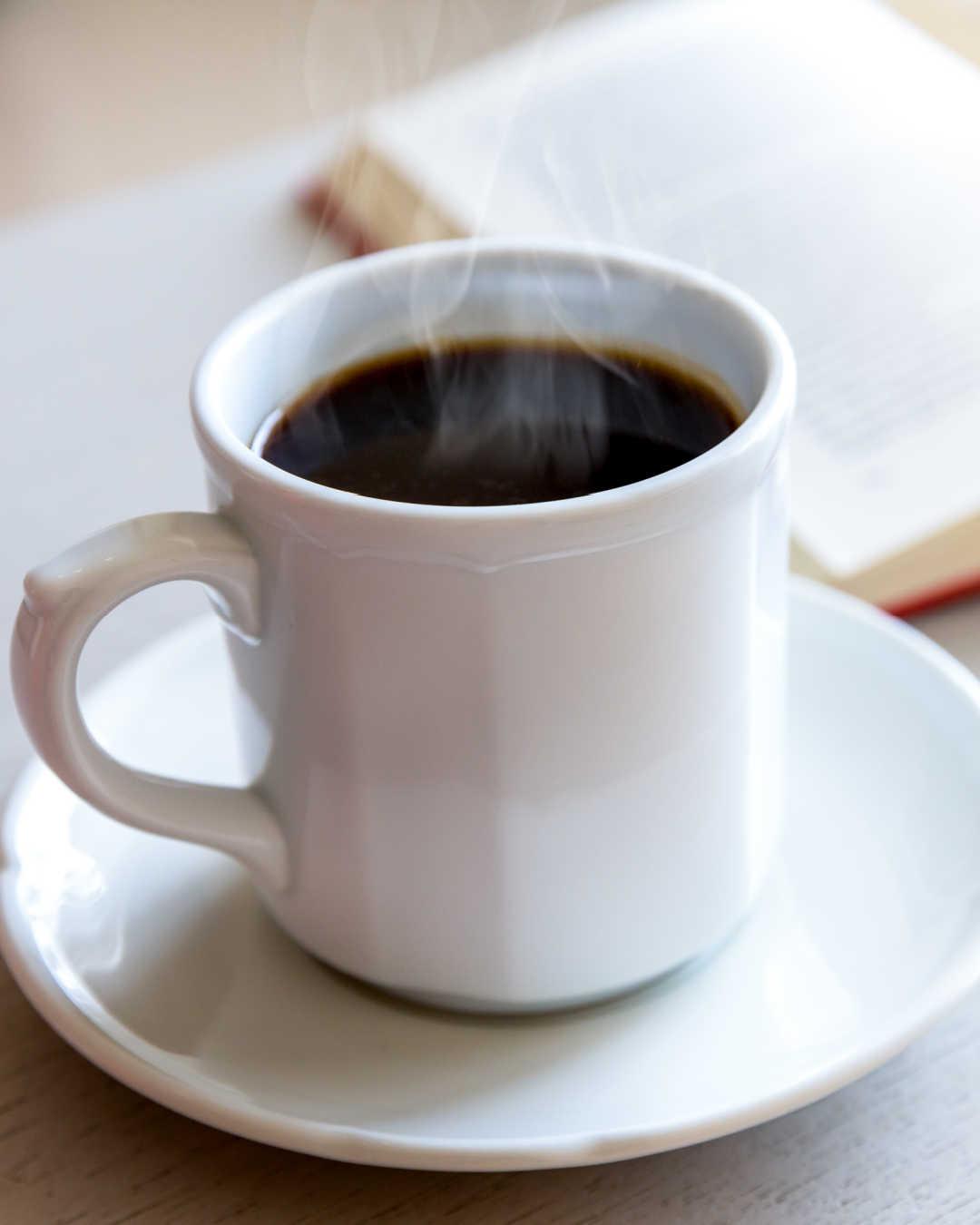
Much of what we call coffee flavor comes from aroma. Volatile compounds travel from the coffee into the air and then into your nose while you smell and drink.
Temperature affects that release. Hotter coffee can send more volatile compounds into the air quickly, which can make the aroma seem more intense. As the cup cools, the pattern of aroma release changes and some of the highly volatile compounds are simply reduced.
That doesn’t mean hotter always smells better or cooler always smells worse. A very intense aroma can also be harder to separate into individual impressions. As the cup moves toward a comfortable drinking temperature, you may find some characteristics easier to notice even while total aroma is gradually declining.
Temperature Changes What Stands Out on Your Tongue
Temperature can influence taste perception, but coffee does not follow one simple rule such as “cooler coffee is sweeter” or “hotter coffee is always more bitter.”
A 2022 consumer study of black coffee examined tasting temperatures from about 56 to 71 degrees C. Across that range, temperature had relatively little effect on whether consumers judged flavor intensity, acidity, and mouthfeel as about right, compared with the stronger effects of brew strength and extraction. Temperature did affect whether people thought the coffee itself was too hot or too cold and had smaller effects on overall liking.
Why Very Hot Coffee Can Be Harder to Judge
When a coffee is uncomfortably hot, heat itself becomes part of the sensory experience.
You may sip cautiously, take in less liquid, or focus more on the physical temperature than on the coffee’s balance. That can make the first impression less useful for deciding whether the brew is actually too bitter, too sour, or too weak.
The 2022 consumer research found broad individual preference ranges. Many people considered black coffee’s temperature acceptable across much of the tested range, while the hottest samples were more likely to be rated too hot.
That’s one reason to avoid diagnosing an entire brew from the first very hot sip.
Why Cooling Can Make Coffee Seem Better or Worse
Why Some Coffees Seem Better as They Cool
When heat stops dominating the experience, differences in acidity, roast character, body, or finish may become easier to separate. A coffee that initially seemed generically “hot and strong” may reveal more specific qualities once it reaches a comfortable temperature.
The coffee has not necessarily become objectively better. Your perception may simply become clearer at a temperature that is easier for you to evaluate.
Why Some Coffees Seem Worse as They Cool
Cooling can also make a cup less appealing.
Aroma gradually escapes, so a coffee that depended heavily on aromatic intensity may feel flatter later. As the balance changes, an unpleasant note that was less obvious at the beginning may stand out more. A very dark roast may feel harsher to one drinker when the heat no longer dominates, while another coffee may seem dull once its aroma fades.
This is not proof that the brewing was wrong. It may simply be the way that coffee’s sensory balance changes through your normal drinking window.
If a cup consistently becomes unpleasant at the same stage, that pattern is useful. It tells you more than one isolated sip does.
Use a Three-Sip Cooling Check
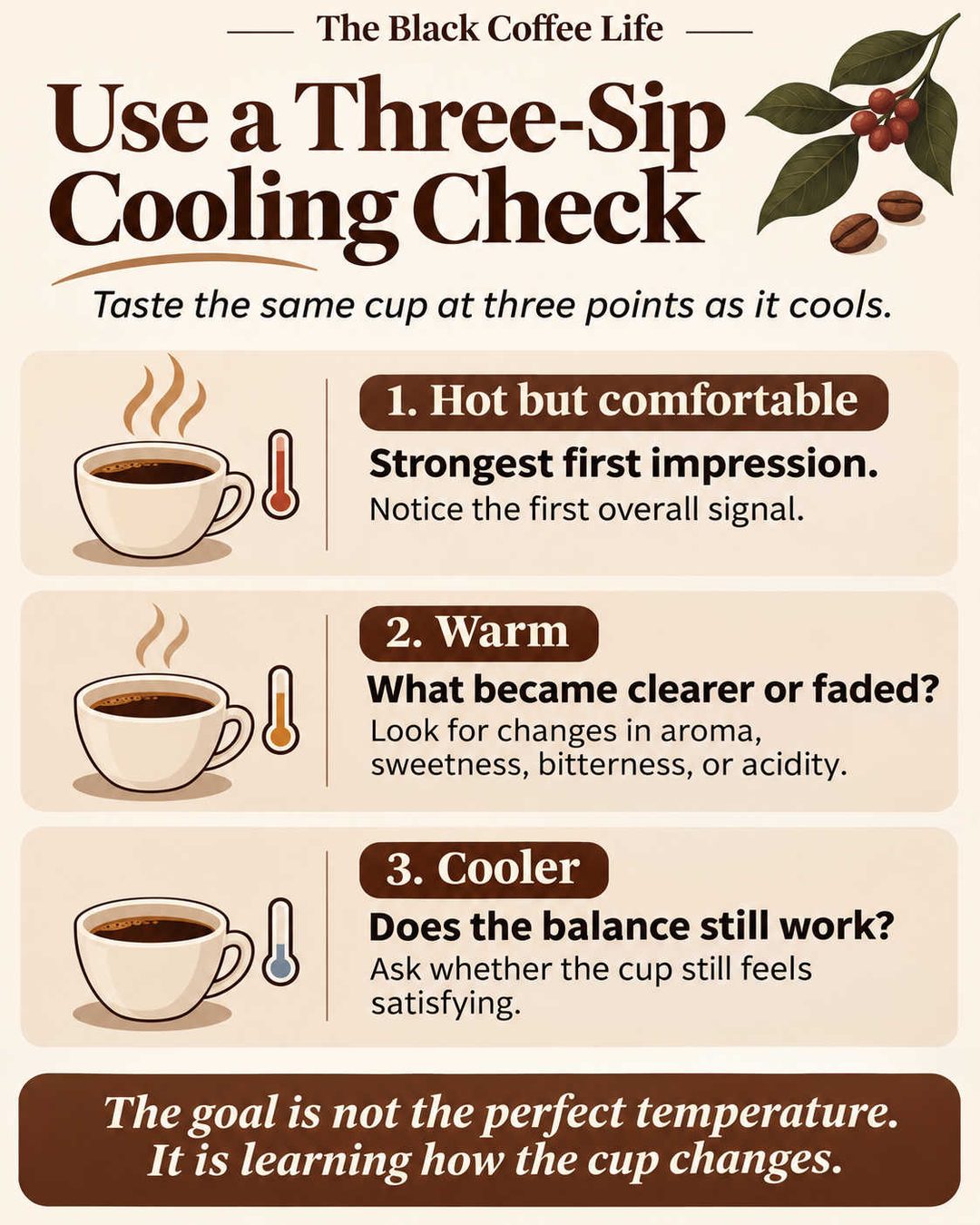
You do not need a thermometer or a tasting form. Use one cup and pay attention at three ordinary points in the drinking window. The goal is comparison, not scoring.
Hot but Comfortable
Take the first deliberate sip once the coffee is comfortable enough to drink normally. Notice the strongest impression: aroma, bitterness, acidity, strength, or body.
Do not decide yet whether the brew needs fixing.
Warm
Return to the cup several minutes later. Ask what became easier to notice and what faded.
Did the coffee seem brighter? Less bitter? Flatter? Fuller? Did a flavor that was hidden by heat become clearer?
Cooler
Take one final comparison before the cup becomes unpleasantly cool for you.
Notice whether the overall balance still works. You are not trying to identify a professional tasting note. You are looking for a directional change across the same cup.
Do Not Change the Recipe Based on the First Sip Alone
If the first sip seems sharp or harsh but the cup becomes balanced as it cools, changing the grind immediately may solve the wrong problem.
The reverse can happen too. A coffee may seem pleasant while very hot but become dull or rough later. That pattern may point toward the coffee itself, freshness, extraction, or simply your temperature preference.
Look for the same behavior across more than one brew before making a major adjustment. Temperature is one variable in perception, not a diagnosis by itself.
If your coffee tastes different from one day to the next even at similar drinking temperatures, that is a different problem. TBCL’s day-to-day consistency article owns that diagnosis.
What to Notice in Your Next Cup
With your next black coffee, taste it deliberately at two or three temperatures and describe only what changes.
You might write: “The cup feels more bitter when very hot, clearer when warm, and flatter when cooler.” Or your experience may be the opposite.
The wording does not need to match anyone else’s. The useful part is recognizing that temperature can change your experience enough to affect how you judge the brew.
Once you see the pattern, you can decide whether the coffee needs a brewing change or whether you simply prefer it at a different point in the cooling curve.