
Quick Answer: What does black coffee taste like?
Black coffee tastes bold, slightly acidic, and aromatic, with subtle sweetness depending on the beans, roast level, and brewing method. Without milk or sugar, black coffee reveals the coffee’s true taste. This can include notes that resemble dark chocolate, nuts, fruit, or floral qualities. If black coffee tastes out of balance, the cause is usually brewing technique rather than the coffee itself.

Observed Behavior:
The sensory descriptions in this article come from patterns consistently reported by people new to drinking coffee black. Rather than assuming isolated opinions, this guide synthesizes how dozens of drinkers describe their experience of taste and how it changes as they adjust to acidity, aroma, and balance over time.
What Does Black Coffee Taste Like?
Black coffee taste is the direct sensory experience of brewed coffee without milk, sugar, or flavorings. With nothing added to soften or round it out, black coffee brings acidity, aroma, mouthfeel, and subtle sweetness to the foreground more clearly than any other coffee preparation.
When people ask what black coffee tastes like, they are often reacting to a firm edge or noticeable acidity. These qualities are natural parts of coffee. How strong they feel depends on the beans, the roast level, and how the coffee is brewed. In a well prepared cup, black coffee taste feels balanced and layered rather than overwhelming.
Understanding black coffee taste also helps clarify the difference between taste and black coffee flavor. Taste describes basic sensations like sharpness, structure, or sweetness. Flavor includes aroma and descriptive comparisons such as chocolatey, nutty, fruity, or floral. Learning how these elements work together makes black coffee far more approachable.
This guide is designed to help beginners understand black coffee taste and learn how to improve it without adding anything to the cup. By knowing what to expect and making better buying and brewing choices, you can approach black coffee with confidence instead of guesswork.
What Creates Black Coffee Taste?
Black coffee taste is shaped by a small set of factors that work together.
The coffee bean sets the foundation, including where it was grown and how it was processed. Roast level influences how sugars, acids, and oils develop inside the bean. Brewing method determines how those compounds are pulled into the cup. When these elements align, black coffee tastes expressive and balanced rather than thin or heavy.
If you want to go deeper into bean selection, you can read more about choosing coffee beans for drinking black but this guide focuses on understanding taste outcomes rather than managing individual variables.
The Basic Taste Components of Black Coffee
Black coffee taste is built on a few core sensory components. Understanding them makes it easier to recognize what you are tasting and why certain coffees appeal to you more than others.
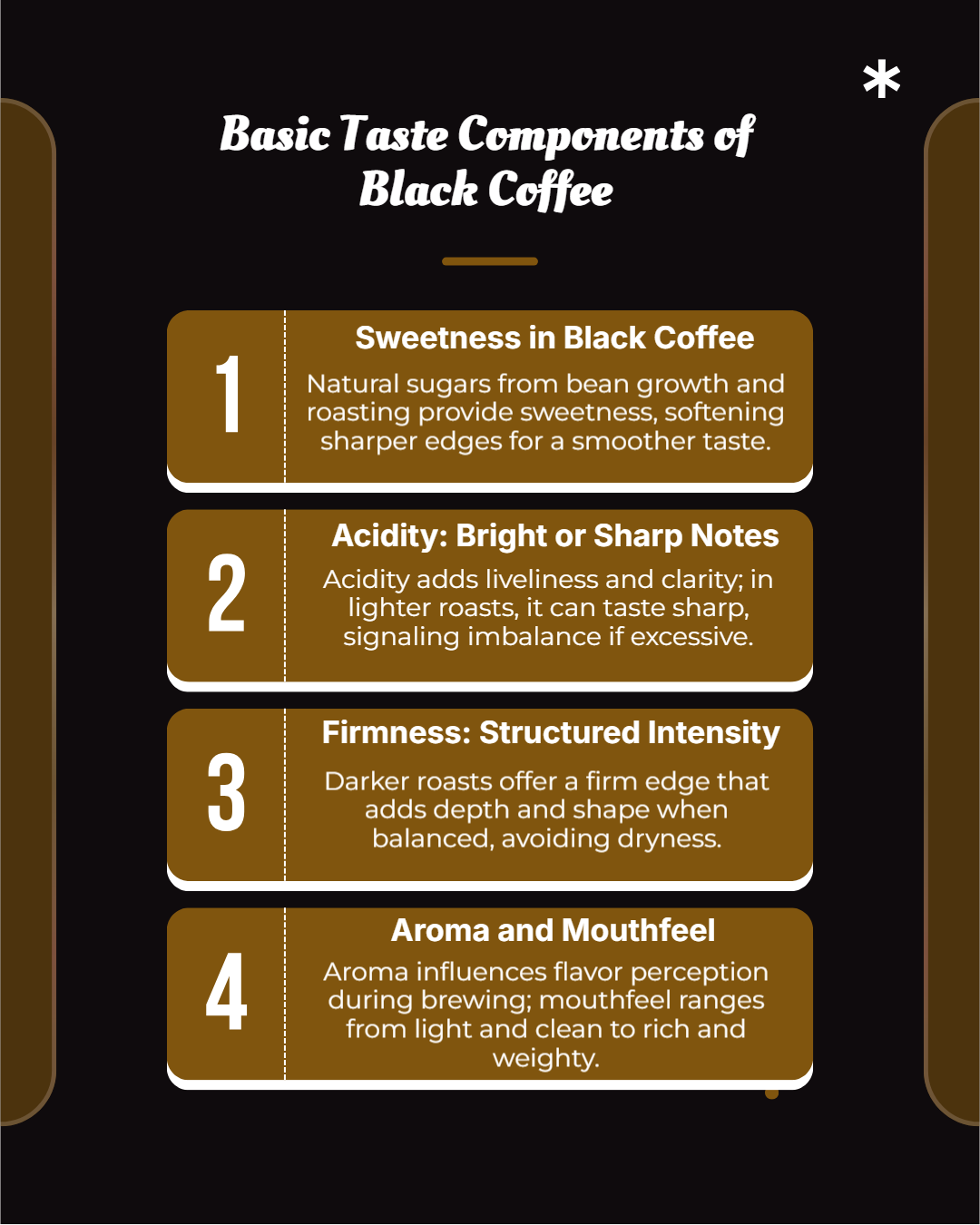
Sweetness in Black Coffee
Sweetness in black coffee does not come from added sugar. It comes from natural sugars that develop in the bean during growth and roasting. When present, this sweetness softens sharper edges and creates a smoother, more pleasant black coffee taste.
Acidity: Why Black Coffee Can Taste Bright or Sharp
Acidity gives black coffee its liveliness and clarity. When it moves to the foreground, the coffee can taste sharp. This is common in lighter roasts and certain growing regions. Sharpness is not always negative, but when it feels excessive, it usually signals imbalance rather than poor quality.
Firmness: Why Black Coffee Can Feel Strong
A firm, structured edge is a natural part of black coffee taste, especially in darker roasts. When that structure dominates, the coffee can feel intense. When balanced, it adds depth and shape without dryness.
Aroma and Mouthfeel in Black Coffee Taste
Aroma plays a major role in black coffee flavor, even though it is not a taste itself. The scents released during brewing and sipping strongly influence perception. Mouthfeel, or body, describes how the coffee feels in your mouth, ranging from light and clean to rich and weighty.
Black Coffee Flavor vs Black Coffee Taste
Black coffee taste refers to basic sensory sensations such as sharpness, structure, or sweetness. Black coffee flavor includes aroma and descriptive comparisons like chocolate, nuts, fruit, or floral notes.
Early on, most people notice taste first. Flavor becomes easier to identify with experience. Understanding this difference explains why two coffees can feel similar on the tongue but still seem very different overall.
Common Black Coffee Flavor Notes and What They Mean
Once you understand basic black coffee taste, you may begin to notice more specific flavor descriptions. These are known as black coffee flavor notes. Flavor notes are not ingredients added to coffee. They are comparisons used to describe how coffee tastes and smells.
Fruity and Berry Flavor Notes
Fruity flavor notes often include citrus, berries, or stone fruit. These flavors are common in lighter roasts and can make black coffee taste lively and refreshing rather than heavy.
Chocolate and Nutty Flavor Notes
Chocolate and nutty notes are among the most familiar black coffee flavor notes for beginners. They often appear in medium to dark roasts and tend to create a rounder, smoother black coffee taste.
Floral and Herbal Flavor Notes
Floral and herbal notes describe lighter, more delicate aromas such as jasmine, tea, or herbs. These flavors add complexity without sweetness and often become easier to recognize with experience.
How Roast Level Changes Black Coffee Taste
Roast level has a major influence on black coffee taste. As beans roast, their sugars, acids, and oils change, shaping how the coffee feels and tastes in the cup.
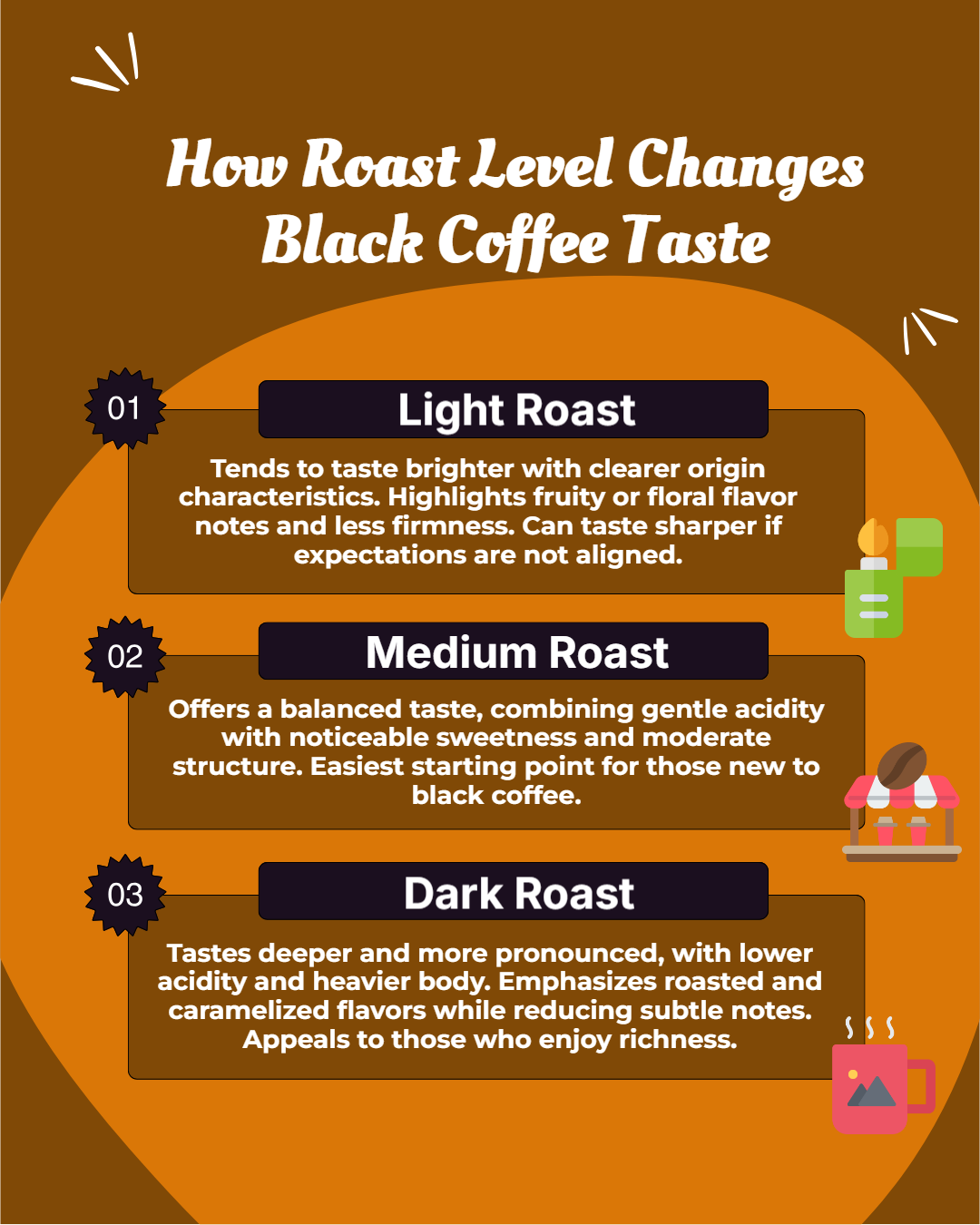
Light Roast Black Coffee Taste
Light roast black coffee tends to taste brighter, with clearer origin characteristics. These coffees often highlight fruity or floral flavor notes and less firmness. Early on, light roasts can taste sharper than expected if expectations are not aligned.
Medium Roast Black Coffee Taste
Medium roast coffee offers a balanced black coffee taste, combining gentle acidity with noticeable sweetness and moderate structure. For many people new to drinking coffee black, this roast level is the easiest place to start.
Dark Roast Black Coffee Taste
Dark roast black coffee tastes deeper and more pronounced, with lower acidity and heavier body. Longer roasting emphasizes roasted and caramelized flavors while reducing subtle notes. Some drinkers enjoy this richness, while others prefer lighter expressions.
If you want to understand why roasting creates these differences read our more detailed look at coffee roasting.
Brewing Methods and Their Effect on Black Coffee Taste
Brewing method directly affects black coffee taste because it controls how flavors are extracted from the grounds. This section focuses on how different brewing methods tend to taste, not how to adjust them.
Pour Over and Black Coffee Taste
Pour over brewing produces a clean, clear black coffee taste with noticeable brightness and distinct flavor notes. It highlights clarity, especially in light to medium roasts.
French Press and Black Coffee Taste
French press brewing creates a fuller, heavier black coffee taste. More oils remain in the cup, emphasizing body and richness while softening sharper edges.
Espresso and Black Coffee Taste
Espresso delivers a concentrated black coffee taste with focused flavor and thicker mouthfeel. Because it is concentrated, balance matters. When brewed well, espresso can highlight sweetness and depth.
Drip Coffee and Black Coffee Taste
Drip coffee offers a balanced black coffee taste that sits between clarity and body. Paper filtration reduces heaviness while preserving sweetness and mild acidity, making it forgiving for beginners.
To explore more, read about the different ways of brewing coffee.
How to Taste Black Coffee and Identify Flavor Notes

Tasting black coffee does not require special tools or technical language. A simple, attentive approach is enough.
Smell the coffee before sipping. Take a small sip and let it coat your mouth. Notice where sensations appear, such as structure at the back of the tongue or brightness along the sides. Then describe what you notice using simple words.
With repetition, black coffee flavor notes become easier to recognize and describe.
Why Black Coffee Can Taste Out of Balance (And How to Improve It)
When black coffee does not taste enjoyable, the cause is usually imbalance rather than bad coffee.
A drying edge, sharpness, or what many people describe as bitterness may stand out more than expected. This is a normal part of black coffee taste and often feels less prominent as your palate becomes more familiar with it. These experiences are common when people first begin drinking coffee black.
If the cup feels out of balance, small changes can improve black coffee taste. For a deeper, step by step breakdown of every variable that affects black coffee taste–including grind size, water temperature, and ratios–see our full guide on black coffee taste variables.
Single Origin vs Blends: Which Should You Buy for Black Coffee Taste?
If you are buying coffee to drink black, the choice depends on what you want the coffee to taste like.
Blends are designed for balance and consistency. They tend to taste smoother and more predictable, which makes them an easy starting point.
Single origin coffees highlight distinct characteristics tied to where the coffee was grown. They make flavor differences more obvious but can feel less forgiving if brightness is not to your taste.
If you are unsure, start with a medium roast blend. Once you know whether you prefer brighter or richer coffee, try a single origin to explore further.
How to Choose Coffee That Tastes Good Black
When you drink coffee black, buying choices matter more because nothing is added to round out the cup.
Start with a roast level that fits your preferences. If black coffee tastes too strong, avoid very dark roasts at first. If it tastes too sharp, avoid very light roasts. Medium roast is often the easiest entry point.
Choose the freshest coffee available. Coffee that has lost freshness often tastes flat.
Whole bean coffee usually delivers better black coffee taste, but using the correct grind for your brewer matters more than chasing perfection.
Use flavor notes as direction, not promises. Chocolate and nutty notes suggest richer taste. Fruity and floral notes suggest brighter taste.
Is Black Coffee Taste an Acquired Taste?
For many people, yes.
Taste perception often changes with repeated exposure. What feels intense at first often becomes more balanced as acidity and structure become familiar. This does not mean forcing yourself to drink coffee you dislike. It means allowing your palate time to adjust.
Starting with balanced coffees and realistic expectations makes the transition easier.
How to Start Enjoying Black Coffee Taste
The way black coffee tastes reflects the coffee you choose, how it is roasted, and how it is brewed. Understanding these elements removes much of the mystery and frustration.
By learning what black coffee is meant to taste like and making thoughtful buying choices, you can enjoy black coffee for its clarity, complexity, and simplicity without adding anything to the cup.