
Quick Answer: Black coffee often tastes bad at first because your palate is not yet used to bitterness without sugar or cream to soften it. Most people move through what The Black Coffee Life calls the Black Coffee Taste Curve, from shock to tolerance to genuine preference, as taste adapts over time.
If black coffee still feels hard to enjoy, that does not mean you are failing. It usually means you are earlier on the curve than you think.

Why Black Coffee Tastes Bad at First and How Acceptance Follows Over Time
Most people think they simply do not like black coffee. They try it once or twice, find it bitter and harsh, and decide it is not for them. That conclusion feels obvious. But most of the time, it is simply incomplete.
What most people experience is not a fixed dislike. It is the beginning of a predictable adjustment process.
When you remove sugar and cream, coffee stops being a sweet drink and becomes something closer to dark chocolate or dry wine. The bitterness stands out. The acidity feels sharper. If you want a clearer picture of the full range of flavors people notice as they move along the curve, I break that down in What Does Black Coffee Taste Like?
Without fat to soften the edges, every flavor feels louder. For someone used to sweetened drinks, that first cup of black coffee can feel aggressive, even unpleasant.
But here is the part that rarely gets explained.
Your experience of black coffee is not static. It changes in stages. It changes in stages, and not always in a straight line. As your palate adapts and your brewing improves, what once tasted harsh often becomes balanced, then interesting, and eventually enjoyable. For most people this does not happen in a straight line. Good days and bad days often alternate for weeks or months before anything feels consistent.
At The Black Coffee Life, we call this progression the Black Coffee Taste Curve.
The Taste Curve describes how your experience of black coffee changes over time, not because coffee changes, but because your palate, expectations, and habits do. And as taste changes, something else changes with it. Acceptance follows. Preference follows soon after.
Most people think they need to force themselves to accept black coffee, and that belief quietly creates pressure that makes the experience harder than it needs to be. In reality, acceptance is a side effect of understanding what is happening. When bitterness stops being the only thing you notice, resistance fades on its own.
Once you understand this, everything about black coffee starts to make more sense. The harshness you notice is not the end of the story. It is the beginning of it.
In the sections that follow, you will see where most people start, why they get stuck, and how they move forward. Not by forcing themselves to like something they hate, but by understanding how taste actually develops and letting acceptance come naturally.
Is Black Coffee an Acquired Taste? The Four Stages of the Taste Curve
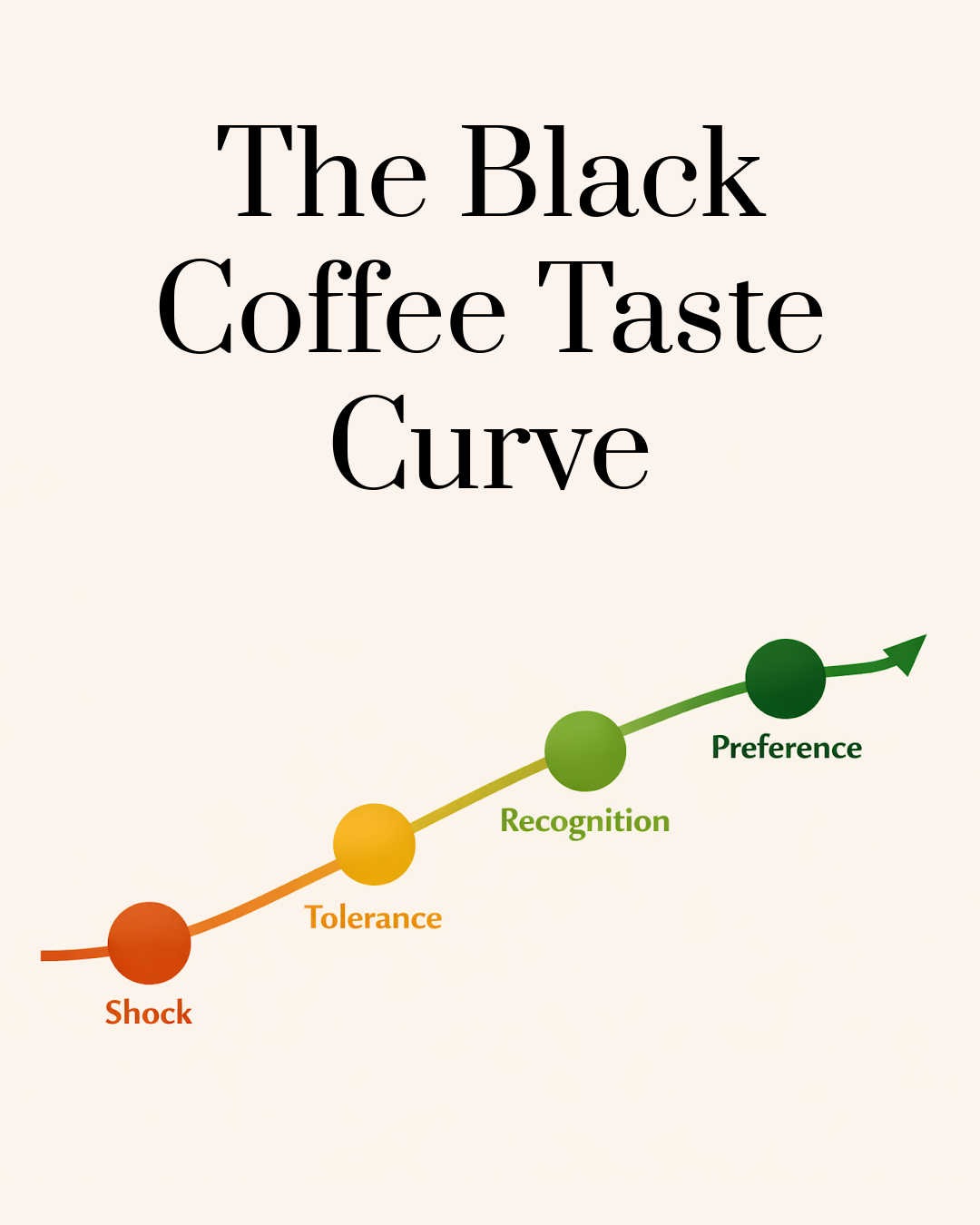
Most people think enjoying black coffee is about willpower. You either like it or you do not. But taste does not work that way. It develops in stages.
When you look closely, almost everyone who ends up loving black coffee passes through the same four phases. The difference is not who has better taste. It is who understands what is happening and keeps going long enough for the shift to occur. This is the heart of The Taste Curve.
Stage 1: Shock
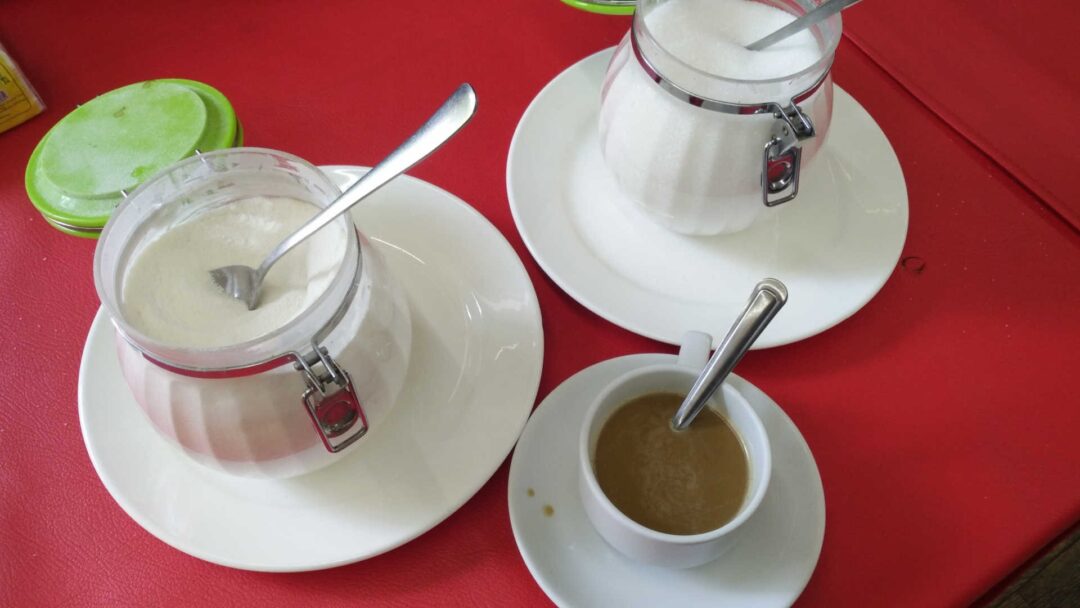
This is where almost everyone starts.
The first time you drink black coffee, bitterness dominates. Without sugar or cream to soften it, the flavors feel loud and unfiltered. For many people, coffee feels aggressive. Harsh. Even unpleasant.
At this stage, you are not really tasting coffee yet. You are reacting to contrast. Your brain is comparing what you are drinking to what you are used to, and what you are used to is sweetness. A lot of what people start noticing at this stage is not just their palate changing, but how different beans, grind size, and brewing methods affect what ends up in the cup, which I cover in Black Coffee Variables That Affect Taste.
Most people quit here and conclude they simply do not like black coffee. It was certainly my opinion for a long time. It’s understandable. It just happens too early.
Stage 2: Tolerance
If you keep drinking black coffee, something shifts.
The bitterness does not disappear, but it stops feeling shocking. You no longer recoil. You still may not enjoy the cup, but you can drink it without wincing. For many people, this is the stage where black coffee becomes a habit, not a pleasure.
They drink it because it feels healthier. Or because it is convenient. Or because they want to cut back on sugar. Taste is not the reason yet.
This is where many people get stuck. They assume this is as good as it gets, simply because no one ever explains what comes next.
This is where I was on my black coffee journey for months. My doctor told me to drink black coffee for my liver health. I considered drinking black coffee as medicine and simply put up with the taste
Stage 3: Recognition
This is the turning point.
One day, usually without fanfare, you notice something beyond bitterness. Maybe a hint of chocolate. Maybe something nutty. Maybe a faint fruitiness you never paid attention to before.
Nothing dramatic has changed in the coffee. What has changed is your perception. Your brain has stopped treating bitterness as the whole story and started noticing the quieter flavors around it.
This is when black coffee begins to feel interesting instead of merely tolerable.
In my own experience this point arrived when I ran out of “grocery store” dark roast coffee and tried some from a smaller coffee roaster brand with a lighter roast, and ground the beans myself. I got a strong hint of chocolate and much less bitterness. That was the moment I realized all coffee is not the same.
Stage 4: Preference
Eventually, something surprising happens.
You find yourself choosing black coffee even when you have other options, and you realize it no longer feels like a decision at all. Not because you are being disciplined. Not because you are trying to be healthy. But because you genuinely prefer it.
At this stage, black coffee feels clean. Direct. Honest. Sweetened coffee can start to feel heavy or distracting by comparison.
This is not because you trained yourself to like something you hated. It is because your taste evolved.In my own experience one day I realized I was skipping the cream not out of habit. Out of preference. That was the moment I understood the curve was real.
Why these stages matter
Most advice about black coffee fails because it ignores this progression. It treats taste as a fixed trait. You either like black coffee or you don’t.
The Taste Curve shows something different: taste is a process. That means disliking black coffee is may not be a verdict. It is simply a moment in a longer progression. Acceptance is not something you force. It is something that follows naturally when your perception changes.
If you are in the Shock or Tolerance stage, nothing is wrong with you. You are not bad at coffee. You are just early on the curve. And early does not mean behind. It means in process.
Understanding that changes everything.
Why People Get Stuck: The Strength vs Extraction Trap
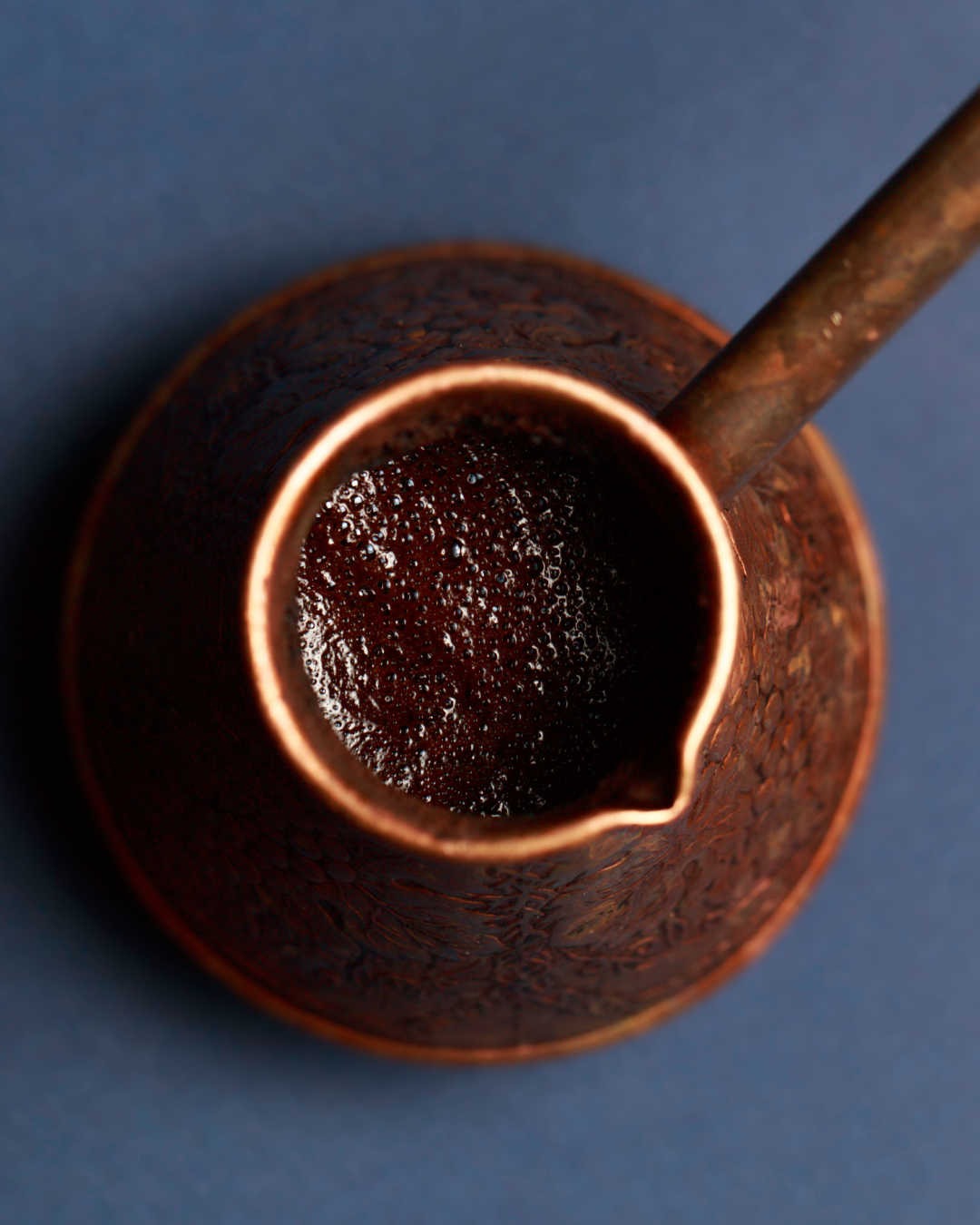
If the Taste Curve explains where people are in their journey, the next question is why so many people stop moving forward even when they want to.
The answer is almost never willpower. It’s confusion. Most beginners think the goal of black coffee is to make it stronger, because strength feels easier to measure than balance. When they try to improve their coffee, they often chase power instead of balance. If your black coffee keeps tasting bitter or sour even after you have tried to improve it, that usually means something in the brewing process is off.
At The Black Coffee Life, we call this mistake the Strength vs Extraction Trap.
What People Mean By “Strong”
When someone says they want strong coffee, they usually mean one of three things.
- They want more caffeine.
- They want a heavier mouthfeel.
- They want a flavor that feels bold and unmistakable.
None of those are wrong. The problem starts when strength becomes the only yardstick for quality.
That is how many people end up brewing coffee that is technically intense but unpleasant to the senses.
What Extraction Actually Controls
Extraction isn’t about power. It’s about balance.
It determines how much of the coffee’s sweetness, acidity, and bitterness end up in the cup. When extraction is right, those elements support each other. When extraction goes too far, bitterness takes over. When it falls short, sourness dominates.
Both mistakes feel like bad coffee. Both slow progress along the Taste Curve.
How The Trap Keeps People Stuck
Here is how the Strength vs Extraction Trap usually plays out:
Someone in the Tolerance stage wants to make black coffee taste better. They brew darker, use more coffee, grind finer, or steep longer. The result feels stronger, but it often tastes harsher.
They conclude that black coffee just is not for them, when what really happened is that the process became confusing instead of clear.
In reality, they did not fail at black coffee. They just fell into the trap.
They chased intensity and accidentally made the journey harder than it needed to be.
My Experience With The Trap
Many people fall into this mistake for years.
They think if coffee did not feel bold, it was weak. I did too. So they brewed darker and longer. And they got what they asked for: a cup that was undeniably strong and consistently unpleasant. Luckily I wasn’t caught in this trap for very long. When I started paying attention to balance instead of intensity, everything changed. The bitterness softened. The sweetness showed up. And black coffee started to feel inviting instead of punishing.
How To Escape The Trap
Escaping the trap does not require new gear or advanced technique. It requires a shift in what you pay attention to.
Stop asking: Is this coffee strong enough?
Start asking: Is this coffee balanced? When you do that, you stop fighting your palate and start understanding it. And that makes it much easier to move from Tolerance to Recognition on the Taste Curve.
Summing Up: Why This Matters

Most people think they need to accept black coffee before they can enjoy it, and that belief quietly creates more pressure than progress.
In reality, enjoyment comes first. Acceptance follows. If you are still somewhere on that path, you are not late. You are exactly where this process usually begins.
The Strength vs Extraction Trap explains why so many people miss that moment, not because they are doing something wrong, but because the signals feel confusing. They are not failing to adapt. They are being led in the wrong direction.
Once you understand the curve and avoid the trap, black coffee stops being a challenge and starts becoming a choice.
And if you are still somewhere on that path, you are not late. You are exactly where this process begins.