You do not need a coffee scale to make good black coffee. But a scale does become useful when inconsistent dosing or changing batch sizes makes your results hard to repeat. The real value is not making coffee more “serious.” It’s removing uncertainty about how much coffee and water you used so you can tell whether another change actually helped.
If your current scoop-and-water routine already produces a cup you like every day, a scale may add precision without solving a real problem.
A Coffee Scale Is a Consistency Tool, Not a Requirement
Coffee scales are often presented as essential equipment, especially in pour-over recipes. That can make a beginner feel as though good black coffee depends on buying another gadget.
But do you need better measurement to understand your coffee?
The Specialty Coffee Association‘s brewing guidance expresses recipes using measured amounts of coffee and water, and its pour-over best-practice guide uses a gram scale so the brewing ratio can be repeated accurately.
That does not mean every home coffee drinker has to weigh every cup. But it does show what the scale is good at: making the recipe measurable and repeatable.
A scale gives you information. Whether that information is worth the extra step depends on the problem you’re trying to solve.
What a Coffee Scale Actually Helps You Control
A scale mainly removes uncertainty from three measurements that are easy to let drift. That makes it easier to repeat a recipe and isolate other variables.
Coffee Dose
A tablespoon or scoop measures volume. Coffee beans and grounds do not always pack into that volume the same way. Different roast levels, grind sizes, and how full you make the scoop can change the actual amount of coffee.
A scale measures mass instead. If you use 30 grams today and 30 grams tomorrow, the coffee dose is much easier to reproduce than “about five scoops.”
That matters most when you are trying to understand why one cup tastes noticeably different from another.
Water Amount
Marked reservoirs are convenient, but they are not always the clearest way to reproduce smaller recipe changes. Weighing brewing water gives you an exact amount to compare with the coffee dose.
For ordinary filter coffee, one gram of water is close enough to one milliliter for practical brewing. That makes ratios easy to repeat without converting between cups, ounces, and spoon measurements.
Repeatability
Repeatability is the main benefit.
If the coffee tastes better after you change the grind, you want to know that the improvement came from the grind rather than accidentally using more coffee. If you compare two beans, you want the basic recipe to stay reasonably stable.
The scale removes one source of doubt but it won’t tell you what coffee should taste like, and it doesn’t decide which recipe you should prefer.
When a Coffee Scale Makes the Biggest Difference
The value of a scale increases when small measurement differences interfere with a decision you are trying to make. These are the situations where that extra precision tends to be most useful.
When You Are Troubleshooting
If your coffee tastes weak one day and overly strong the next, a scale can answer a basic question quickly: Did you actually use the same coffee-to-water relationship?
Once you know the dose and water are stable, you can investigate grind, extraction, freshness, water, or the brewer without guessing.
When You Change Batch Size
A recipe that works for one mug does not always translate intuitively into a half pot or full pot if you measure by scoops. A scale makes scaling the recipe straightforward.
You can keep the same basic ratio and then adjust from there based on taste.
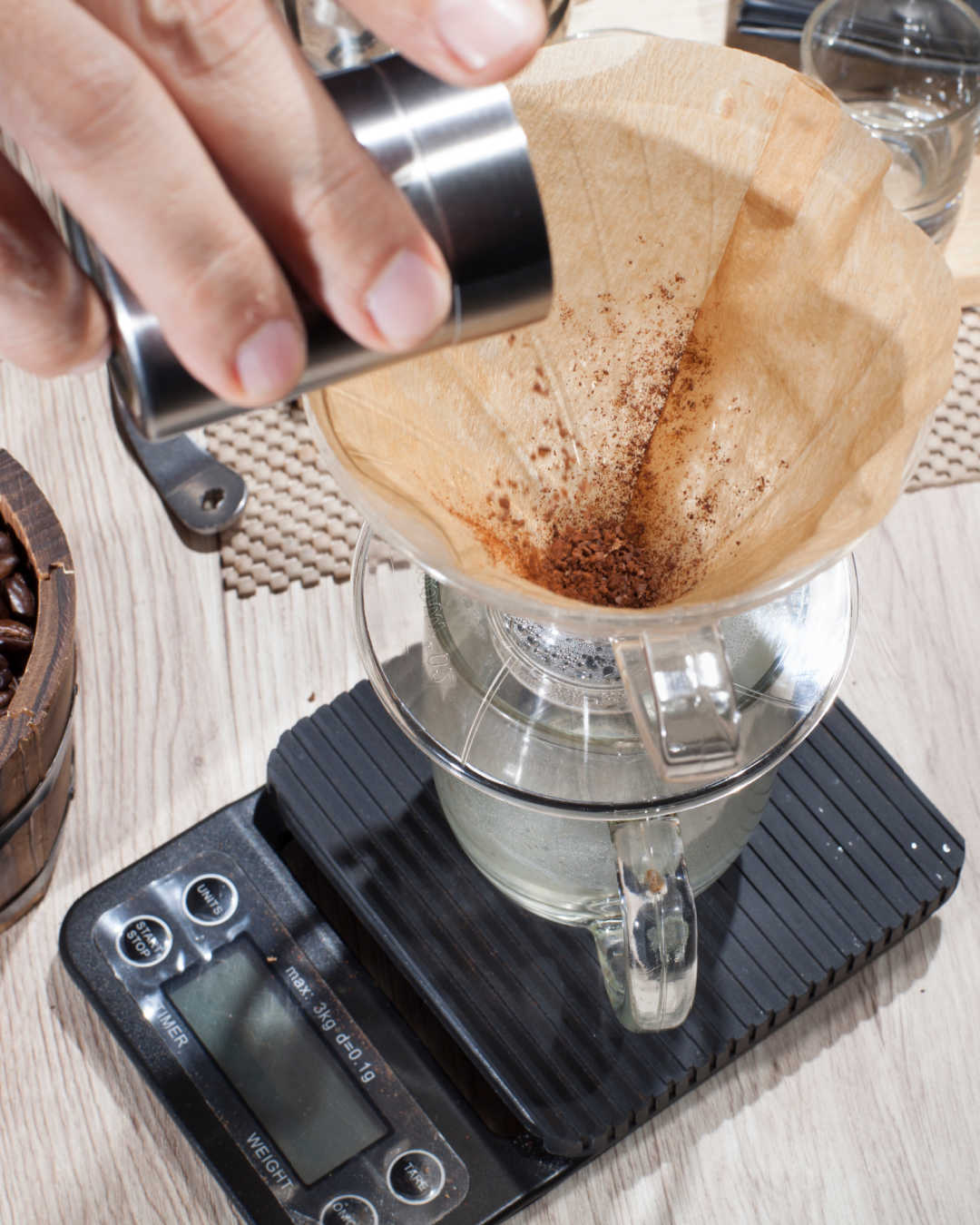
When You Brew Pour-Over Coffee
Pour-over makes the case for a scale especially clear because the brewer does not usually provide a measured reservoir. The person brewing controls how much water is added and, often, how quickly.
The SCA’s published two-cup pour-over guideline uses weighed coffee and water throughout the process. In that context, the scale is part of making the recipe repeatable, not merely an accessory.
When You Are Comparing Ratios
If you want to learn whether you prefer a slightly stronger or lighter cup, weighing keeps the comparison clean.
For example, you can keep the grind, coffee, brewer, and water the same while making a modest ratio change. That is far more informative than changing several things and deciding the new cup is “better.”
TBCL’s Coffee Ratios Explained Simply for Black Coffee Drinkers explains the ratio itself. A scale simply makes that ratio easier to reproduce.
When a Scoop or Marked Coffee Maker Is Good Enough
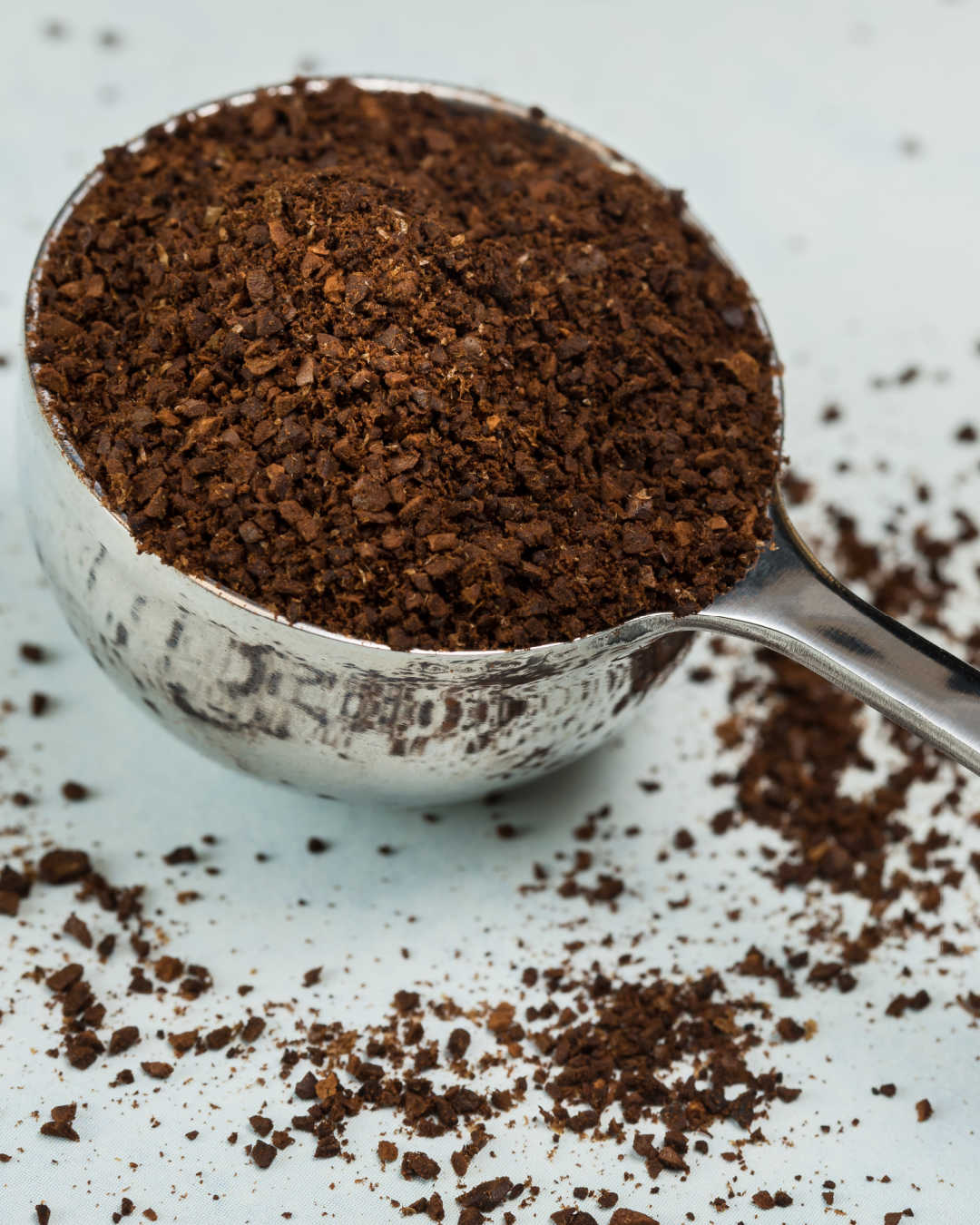
Not every coffee routine needs laboratory precision. A scoop is probably good enough if you use the same coffee most of the time, fill the scoop consistently, brew roughly the same amount, and like the result. A marked automatic brewer may also provide enough repeatability for your purposes.
This is especially true if your goal is a reliable morning cup rather than recipe experimentation.
Buying a scale to solve a problem you do not have adds friction. Add a tool when it removes uncertainty, not because the tool is fashionable.
What a Scale Cannot Fix
A scale can tell you how much coffee and water you used. It cannot make stale coffee fresh. It cannot make an uneven grinder suddenly consistent. It cannot correct water that makes the coffee taste dull, or guarantee that a brewer extracts evenly.
It also cannot tell you whether you personally prefer a lighter or stronger recipe.
This is the most important limit on the purchase decision. If your coffee tastes bad for a reason unrelated to measurement, a more precise measurement of the same problem will not fix it.
What Matters If You Decide to Buy a Coffee Scale
You do not need a long feature checklist. For black coffee at home, a few practical characteristics matter more than specialty-coffee branding.
Capacity
The scale needs to support the brewer, vessel, coffee, and water you intend to place on it. A tiny espresso-oriented scale may be inconvenient under a large carafe or pour-over server.
Resolution
A scale that reads in 0.1-gram increments is useful for small coffee doses, but whole-gram resolution can still be adequate for many larger drip batches. More decimal places do not automatically produce better coffee.
Response Speed
For pour-over, a slow display can make it harder to stop at the intended water amount. For an automatic drip machine, response speed matters much less because you are usually weighing before brewing.
Timer
A built-in timer is convenient for pour-over because time and water can be viewed together. It is optional for most automatic drip routines. A phone timer works just as well if you already use one.
Display and Physical Size
The display should remain readable with your brewer on top, and the platform should fit the equipment you actually use. Those mundane details matter more than app connectivity for many black-coffee drinkers.
A Simple Test Before You Buy One
Before purchasing a scale, repeat your normal brew twice using your current method.
Use the same coffee, brewer, grind setting, scoop, and water markings. Pay attention to how easy it is to reproduce the amounts.
If you can repeat the recipe easily and both cups are satisfying, a scale is unlikely to transform your routine.
If the dose varies, batch sizes are difficult to reproduce, or troubleshooting keeps turning into guesswork, a scale may remove a real source of uncertainty.
Decide Whether Measurement Is Actually Your Problem
The best reason to buy a coffee scale is not that serious coffee drinkers own scales. It is that you have reached a point where imprecise measurement prevents you from learning from your coffee.
If the cup is already repeatable, keep your simple routine. If you are trying to diagnose weak, inconsistent, or unpredictable coffee, knowing exactly how much coffee and water you used can make the next decision much easier.
Use the tool when it answers a question you actually have.